
Gallery 1
11 - 22 November 2026
Opening Night
13 November | 6 - 8 pm
The exhibition closes at 3 pm on the final day.
Pablo Francis
ARTIST STATEMENT
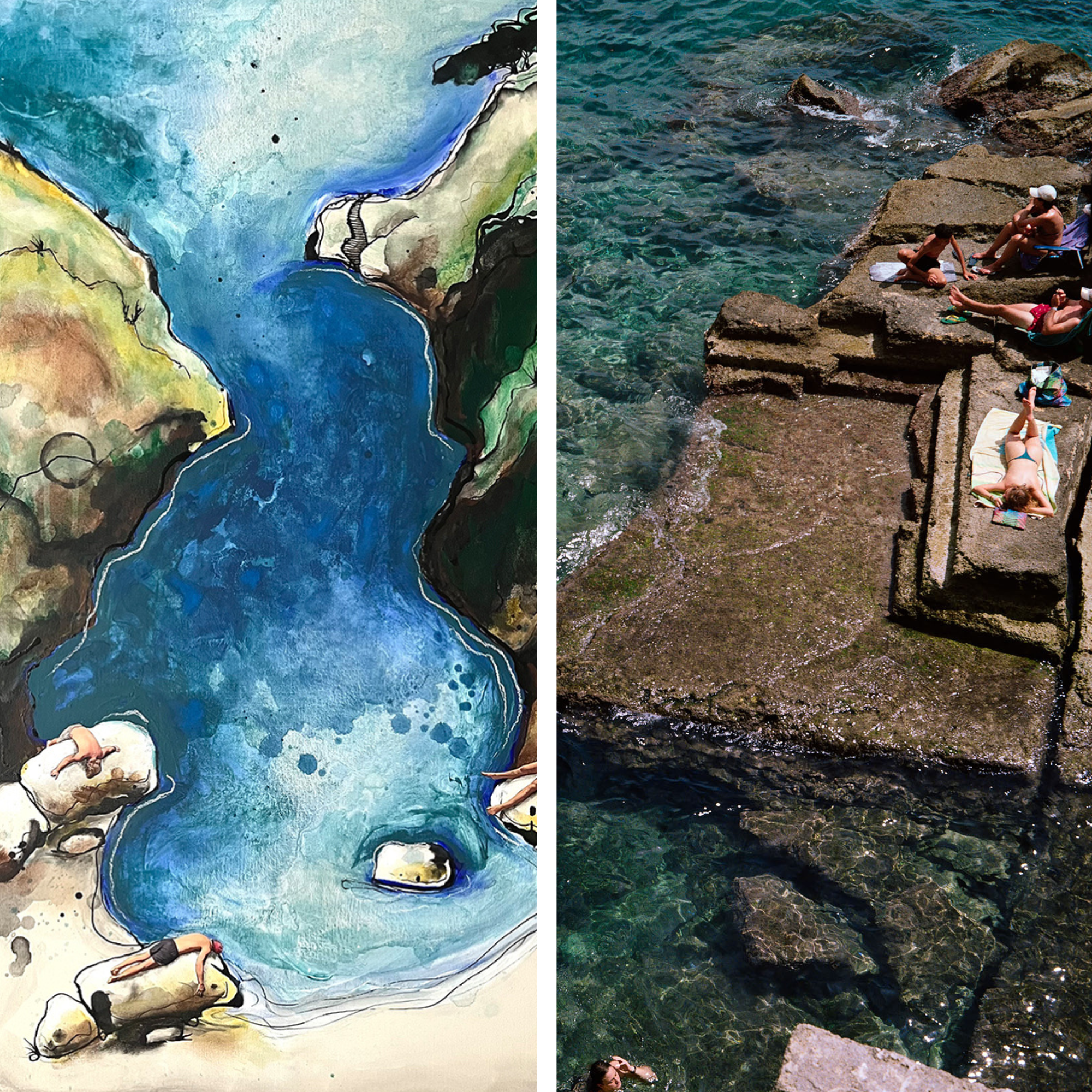
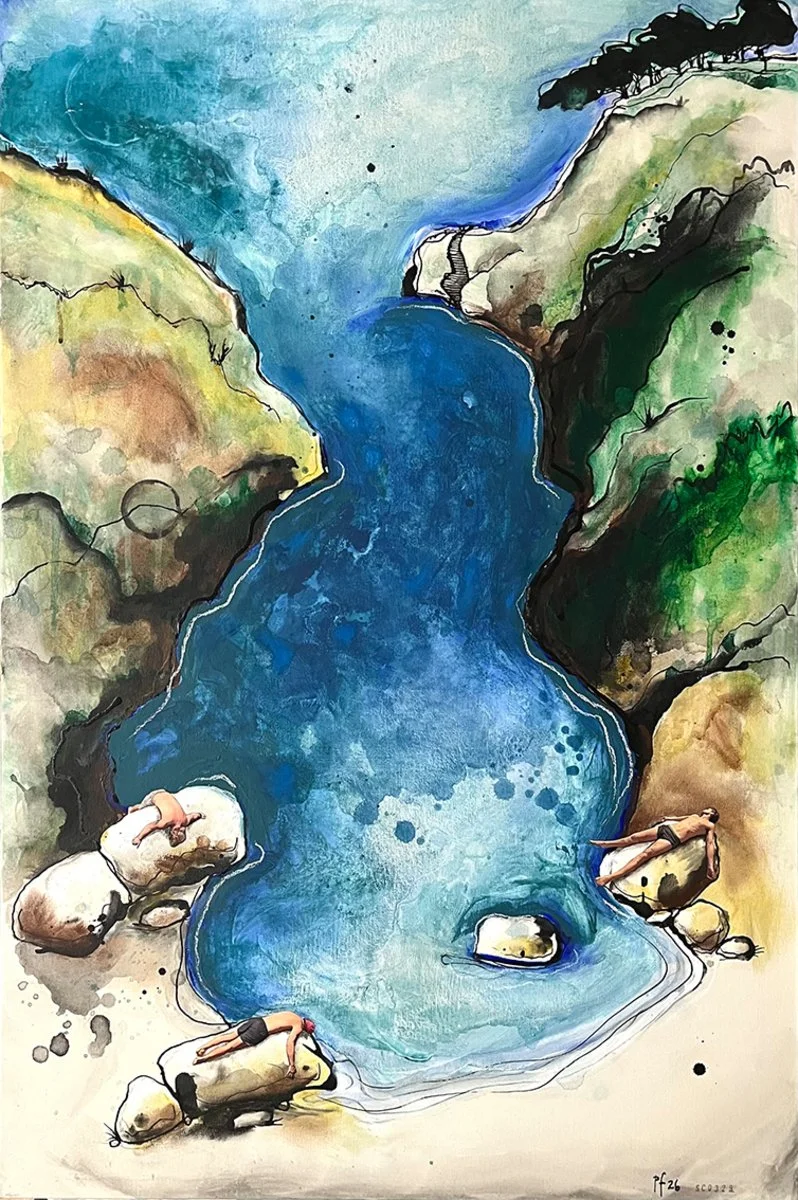
Pablo invites viewers to experience Italy through two separate sensibilities at once. Seeing the way he and Nick respond to the same region without influencing one another creates a kind of visual conversation after the fact, where overlaps, contrasts, and unexpected divergences become part of the experience.
Pablo’s works are unified by an interest in the relationship between observation and recollection. Some began as drawings or photographs made on location; others evolved later through painting, collage and layered mark-making. Rather than seeking a definitive representation of place, they accumulate impressions, allowing memory, experience and imagination to coexist.
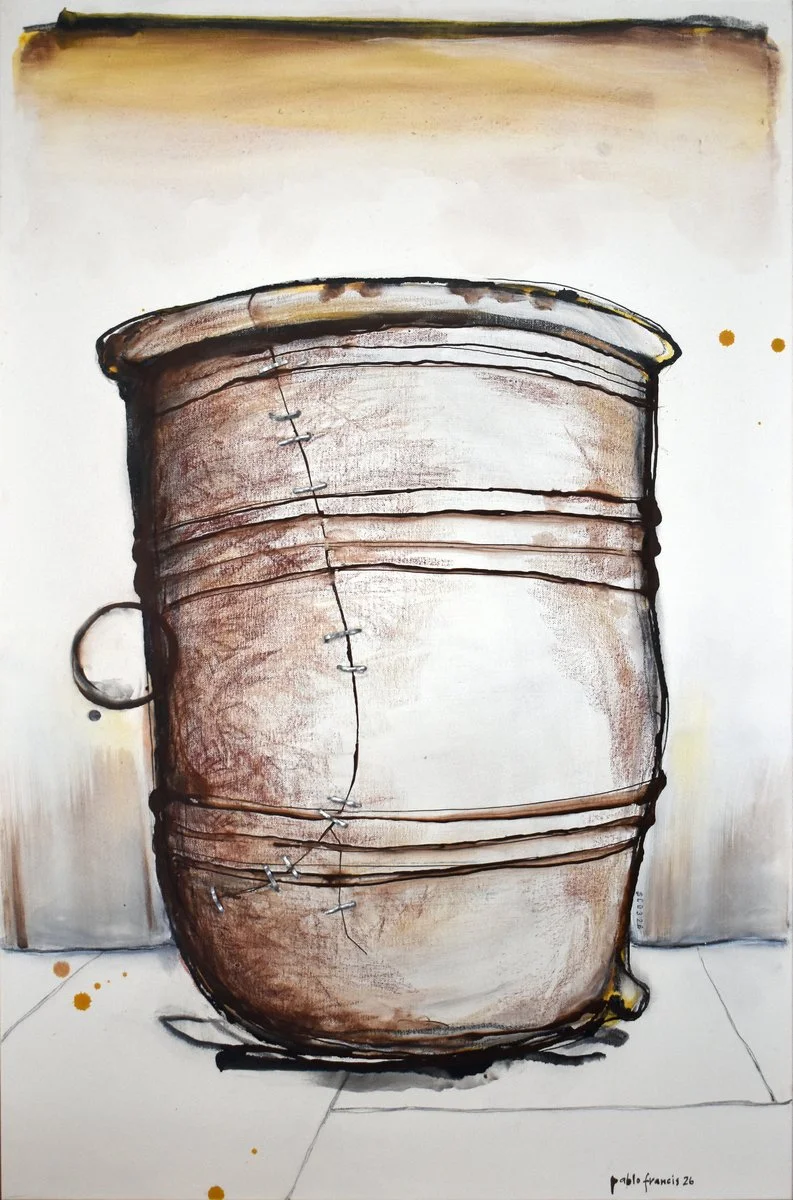
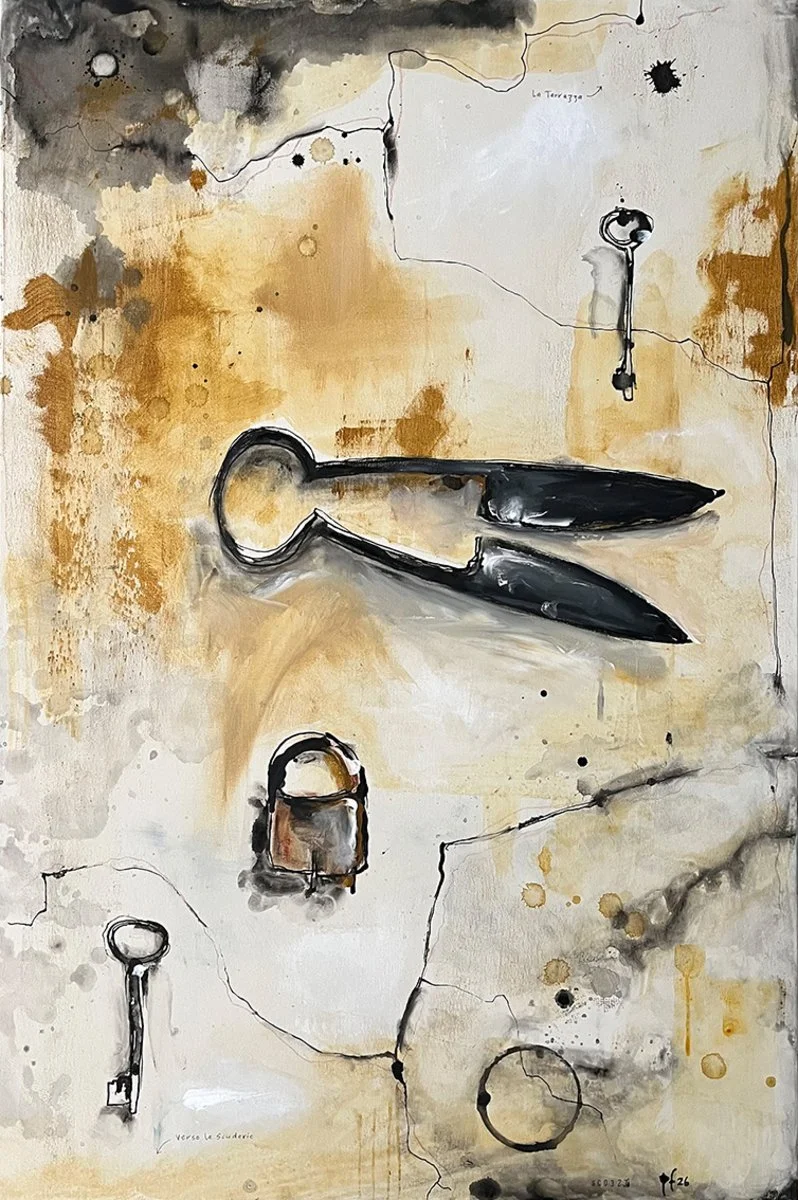
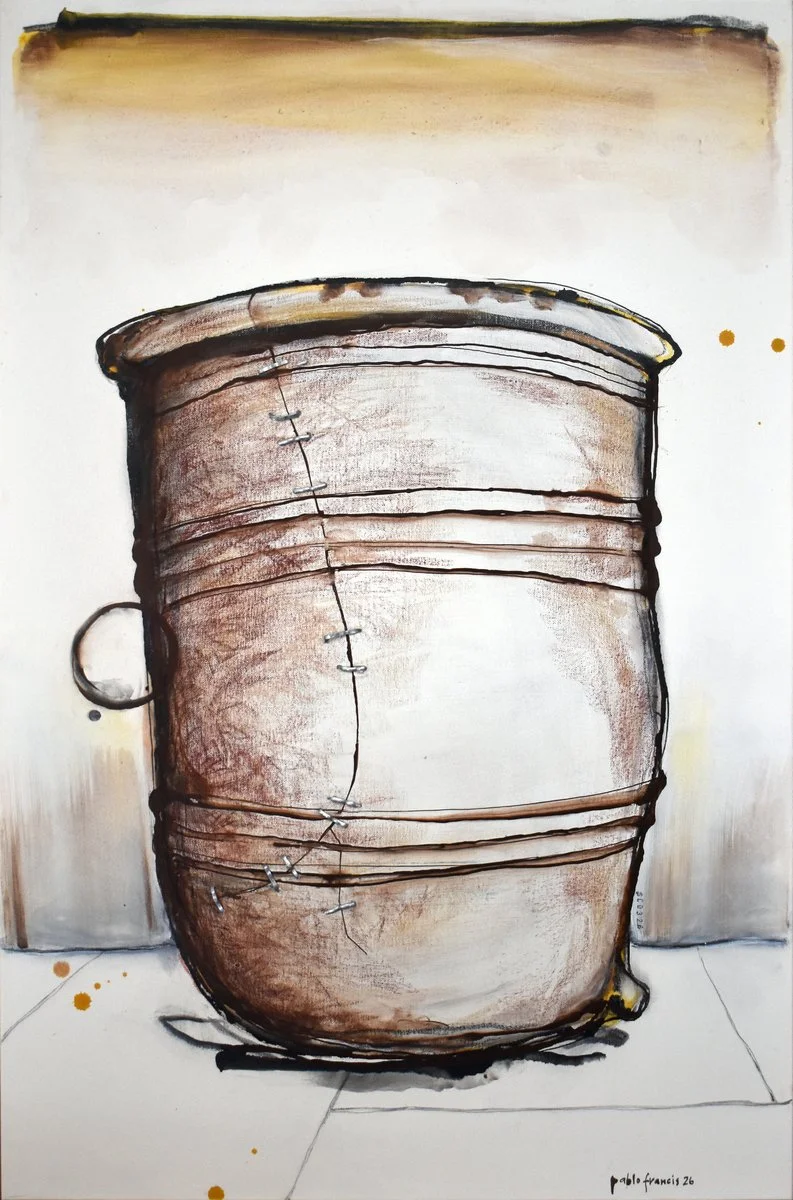
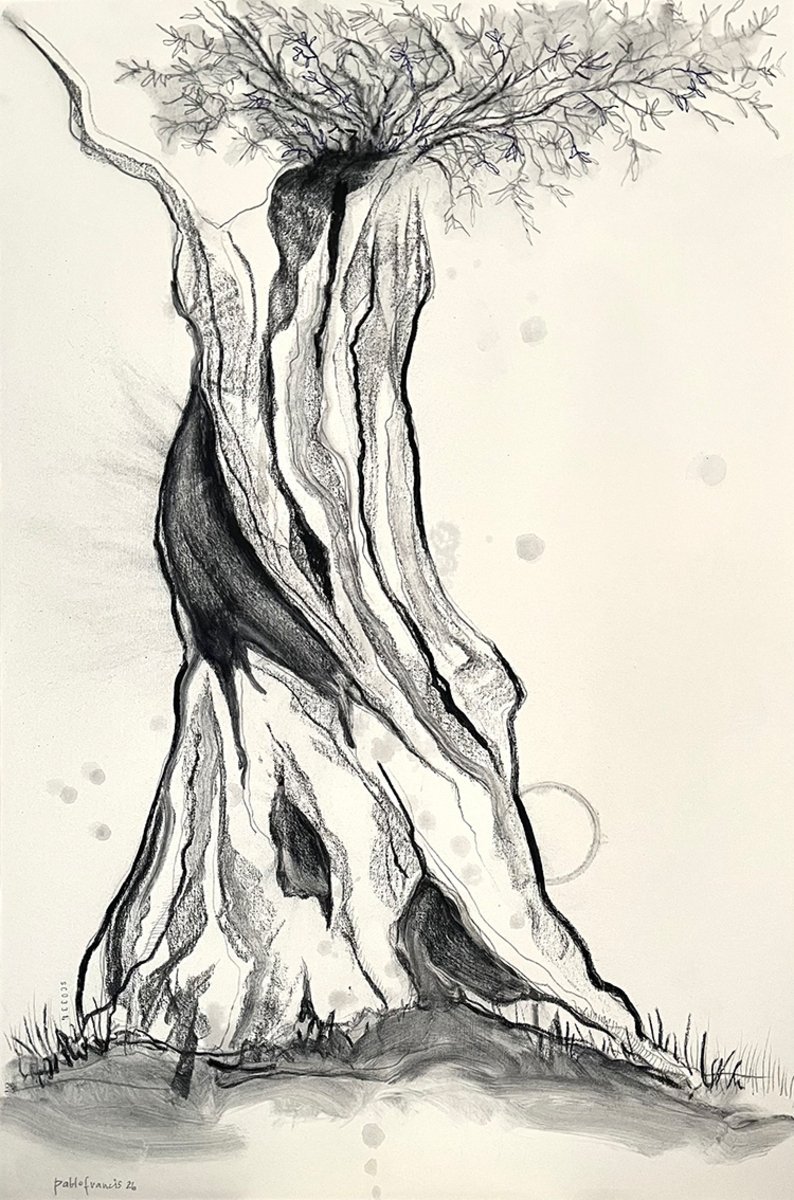
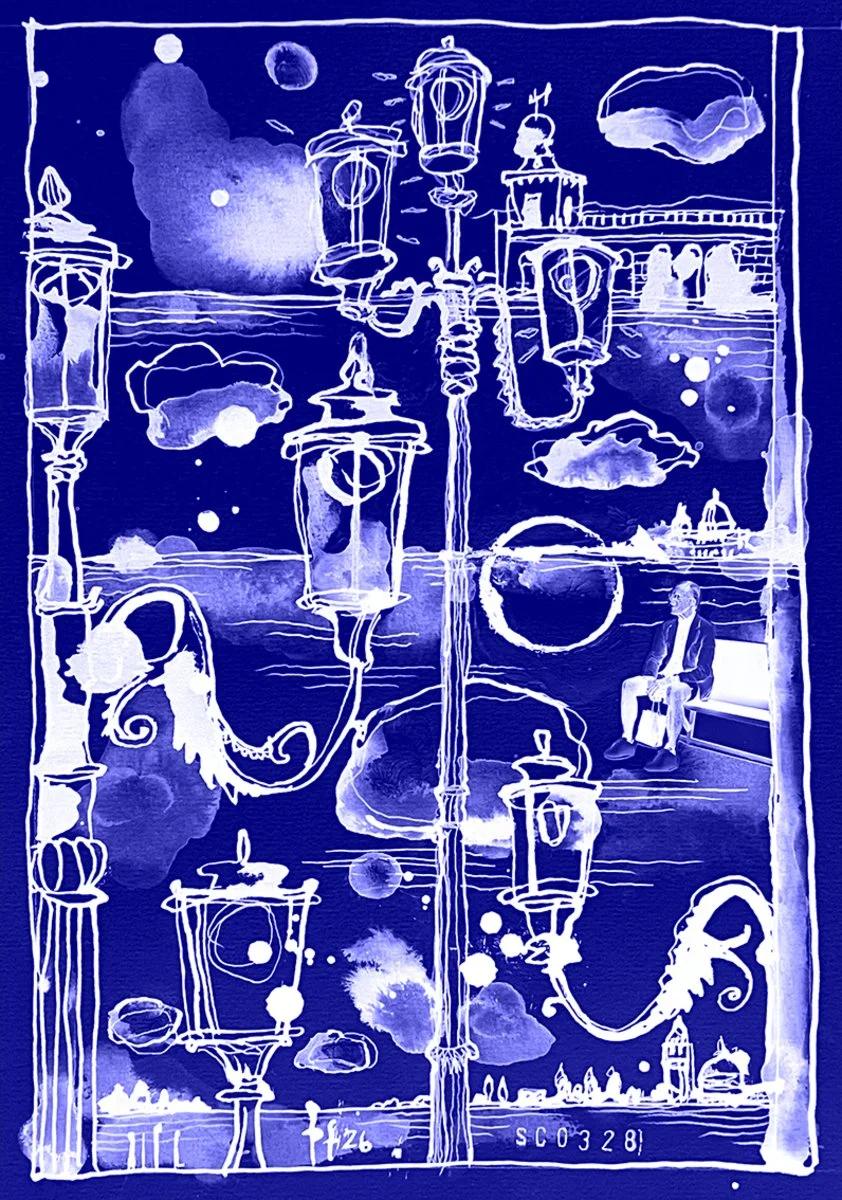
Throughout the exhibition, recurring themes emerge: endurance, repair, memory and transformation. Olive trees scarred by disease stand as symbols of both loss and resilience. Rural roads become pathways through time. Architectural details, discovered almost by accident, reveal traces of lives lived across generations. Objects repaired rather than discarded speak to a culture that values continuity over replacement. Even the Grand Canal in Venice, through its constant rhythms of erosion and renewal, becomes a collaborator in one of the works.
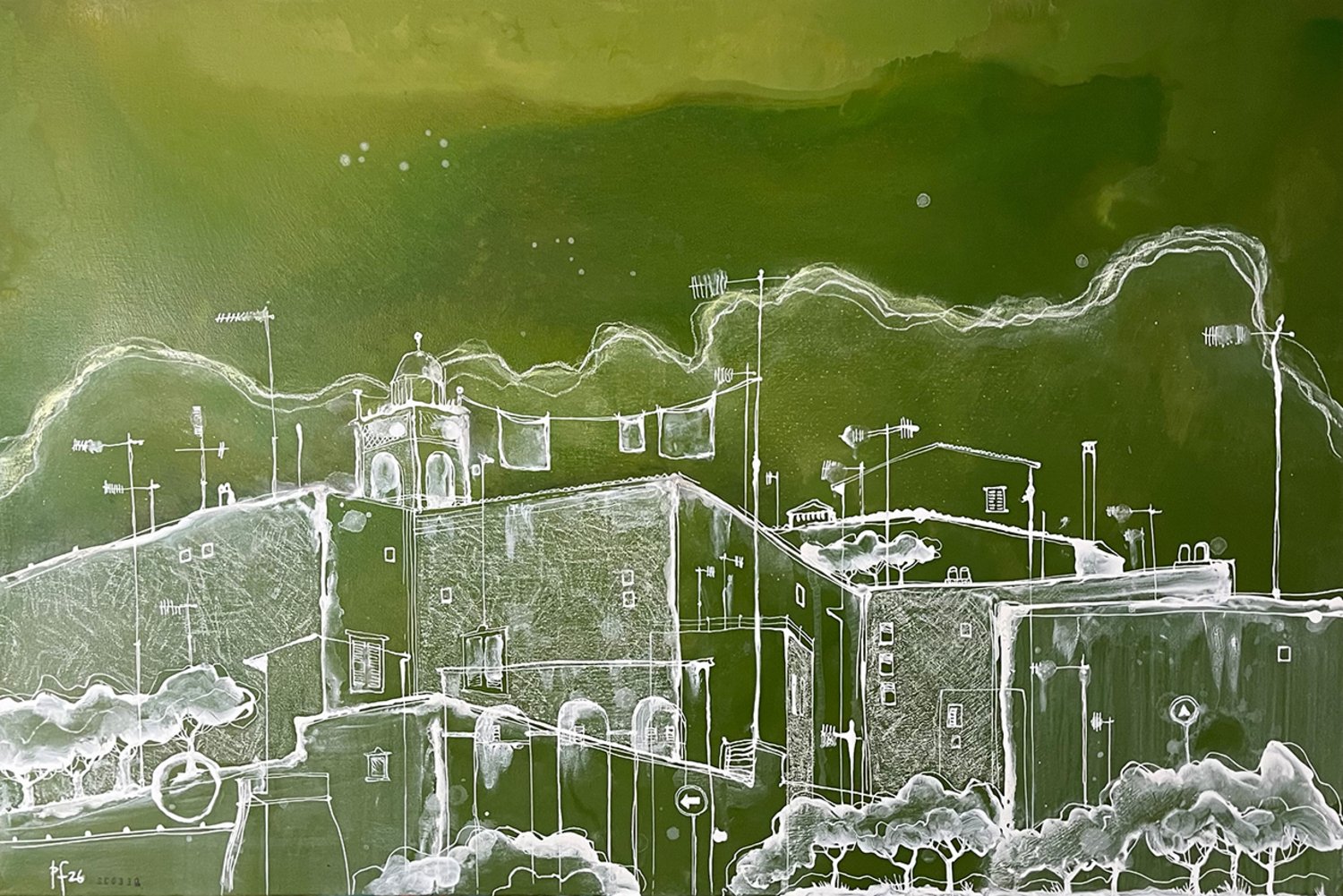
Pablo Francis, Naarm (Melbourne), 2026
ARTIST BIO
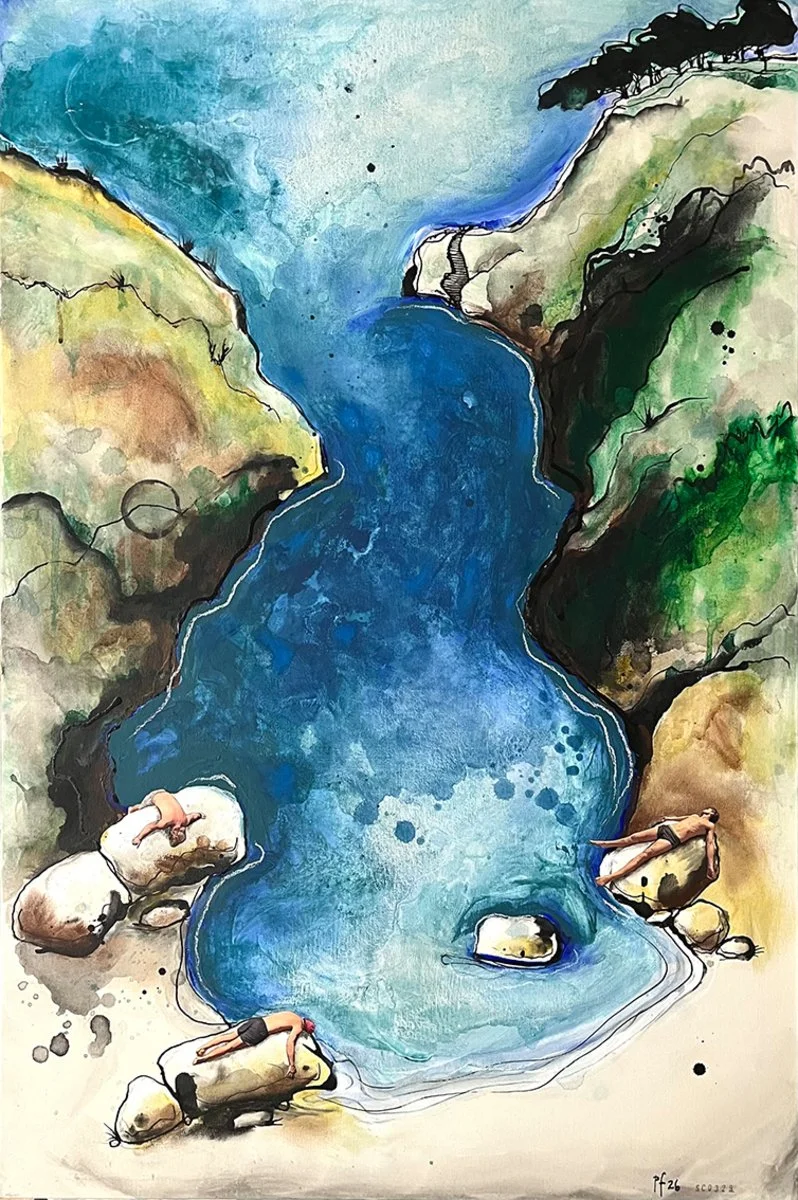
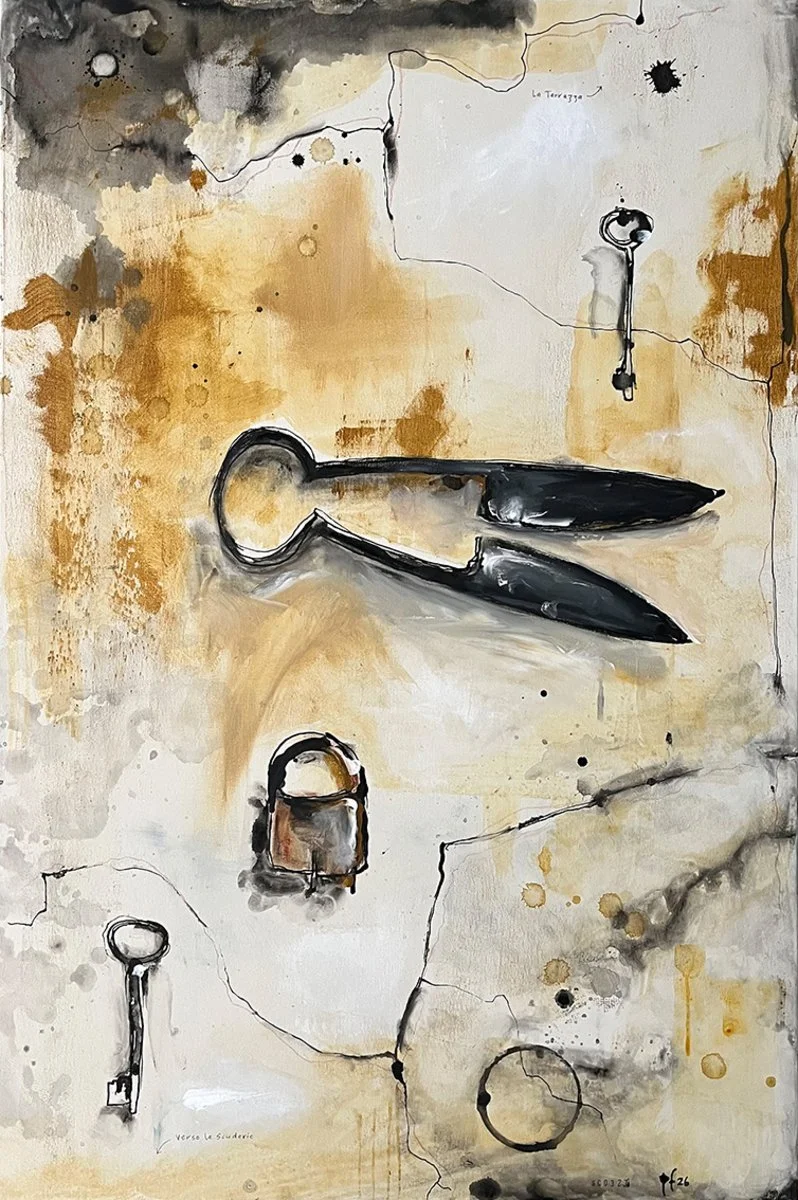
Pablo Francis is obsessed with line work. Loose and flowing or sharp and precise – even better, both. Subject matter tends to vary but there is always line. His work is predominantly made with acrylic and ink, and sometimes he may add diluted tea or coffee to add tone. The flow, immediacy, and unpredictability of these mediums work in his favour.
Brushes are used to introduce pigments to the canvas, and from then he uses his hands. Moving paint and ink together, rubbing and removing with palm or fingers, adjusting while everything is wet and still in motion.
A continuous progression and interrelationship of ideas shape Francis’ approach to subject and form. Recurring motifs relating to ‘truth to process’ are included to reinforce the fresh approach to composition. Droplets of ink or paint and a ‘coffee cup ring’ are signatures that acknowledge both the mediums that are used and the artist’s early explorations in tone. Detail is added in the form of line work or collage to counterbalance the loose approach – adding an element of discovery and focus.
It’s all about what happens on the canvas. Where his line decides to go. He stretches and distorts, lies, and improvises. Always chasing a looseness, an expression to resonate with the viewer.
Exhibitions and commissions:
2026 An Inspiring Line, book published
2025 Group show, Linden New Art, St Kilda Australia
2025 Group show, Brunswick Street Gallery, Fitzroy Australia
2024 Solo show, An Inspiring Line, Red Gallery, Fitzroy North Australia
2020 Group show, Linden Gallery, St Kilda Australia
2020 Commission (mural), Creightons Creek Australia
2019 Commission (mural), Northcote Australia
2010 Commission, The Boathouse, Ho Chi Minh City Vietnam
2009 Group show, Linden Gallery, St Kilda Australia
2004-08 Represented by Nexus Gallery, South Melbourne Australia
2003 Group show, Linden Gallery, St Kilda Australia
2002 Group show, Jackman Gallery, St Kilda Australia
2000 Solo show, Recent Work, Oxcart Gallery, Collingwood Australia
Instagram: @pablofrancis_art
Nick Orloff
ARTIST STATEMENT
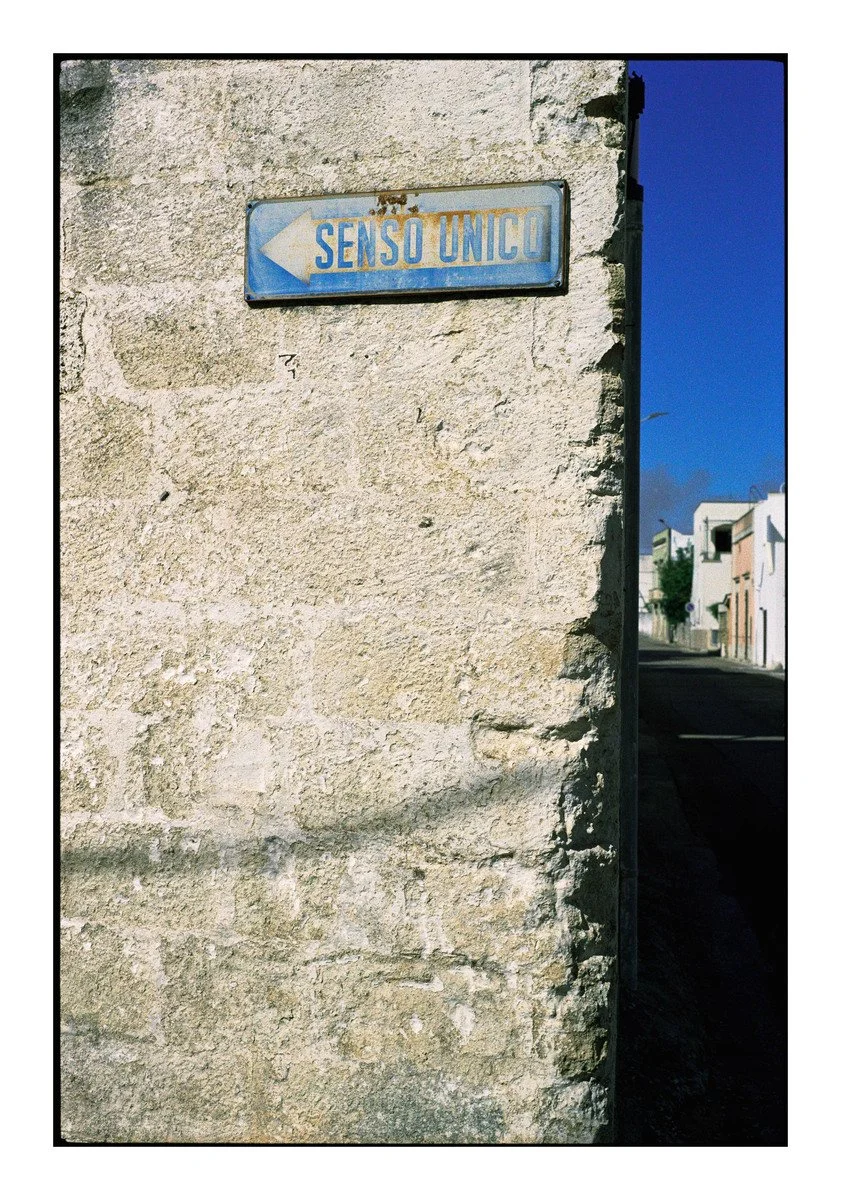
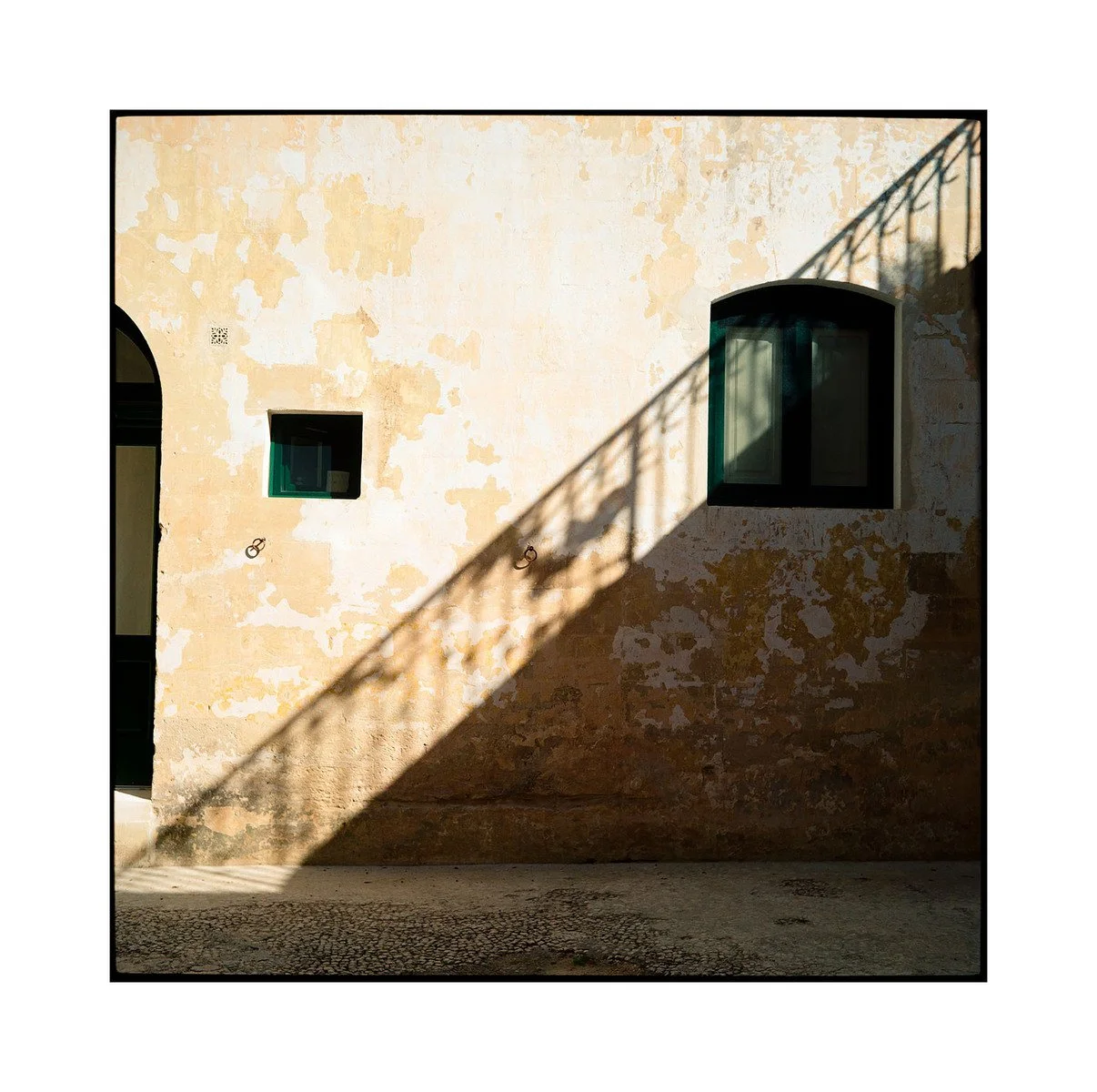
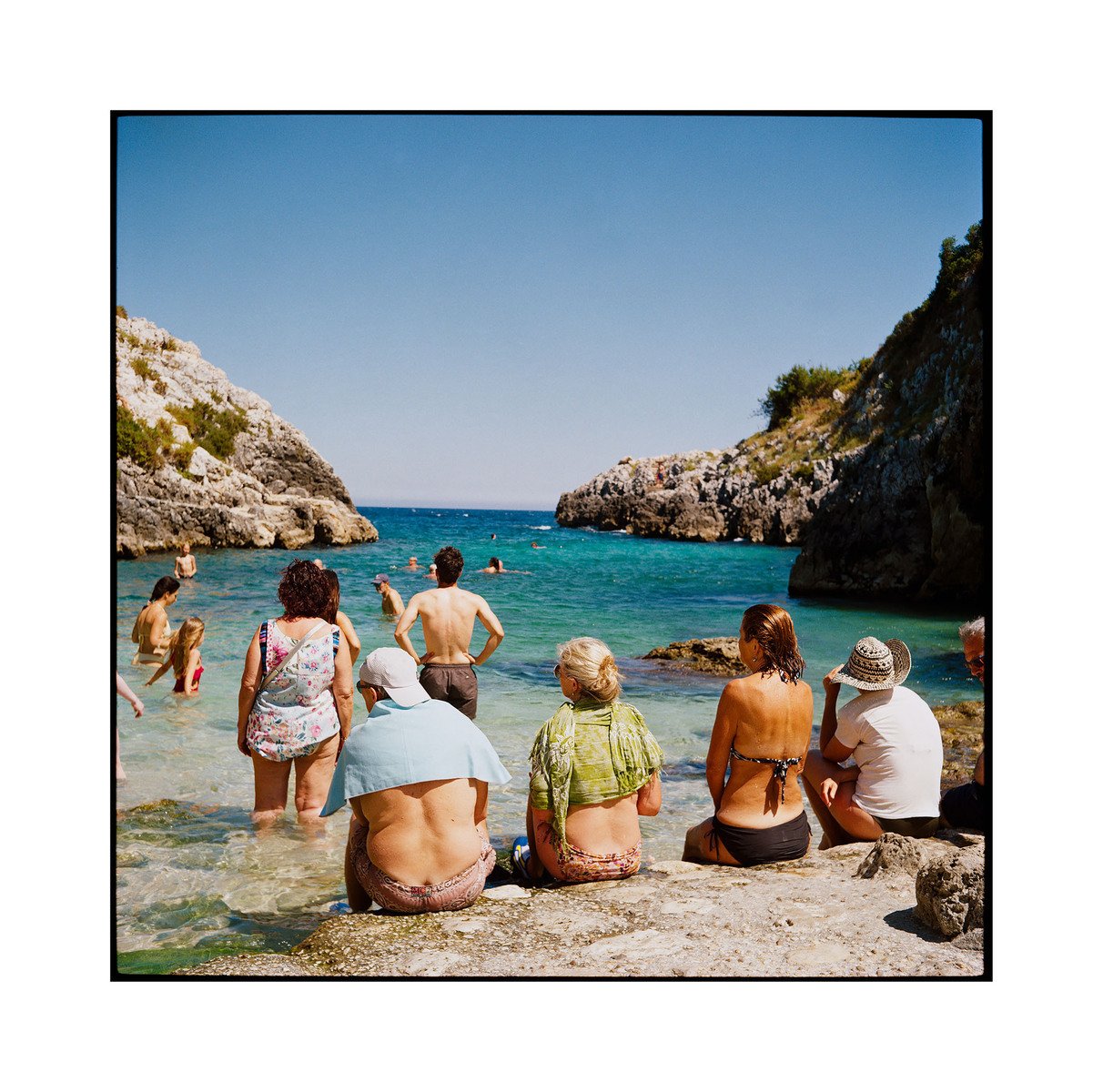
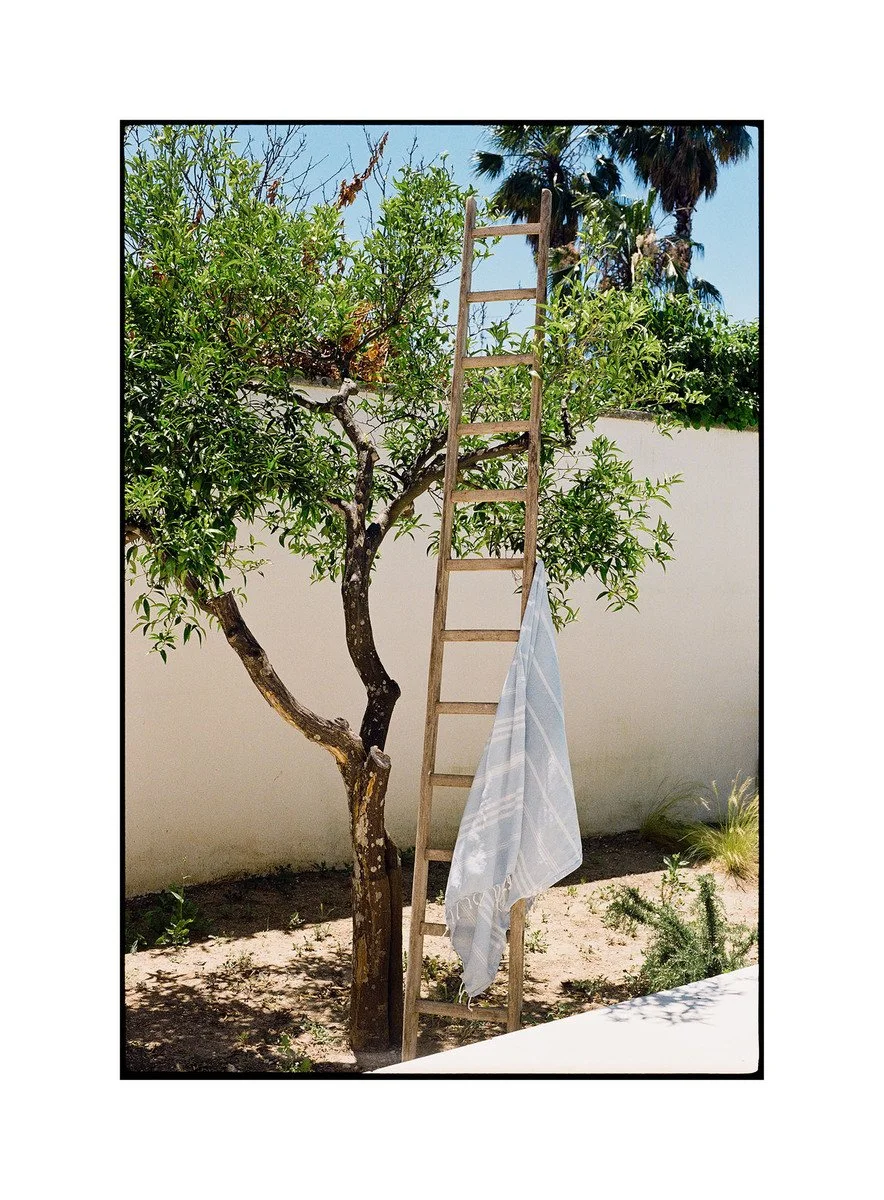
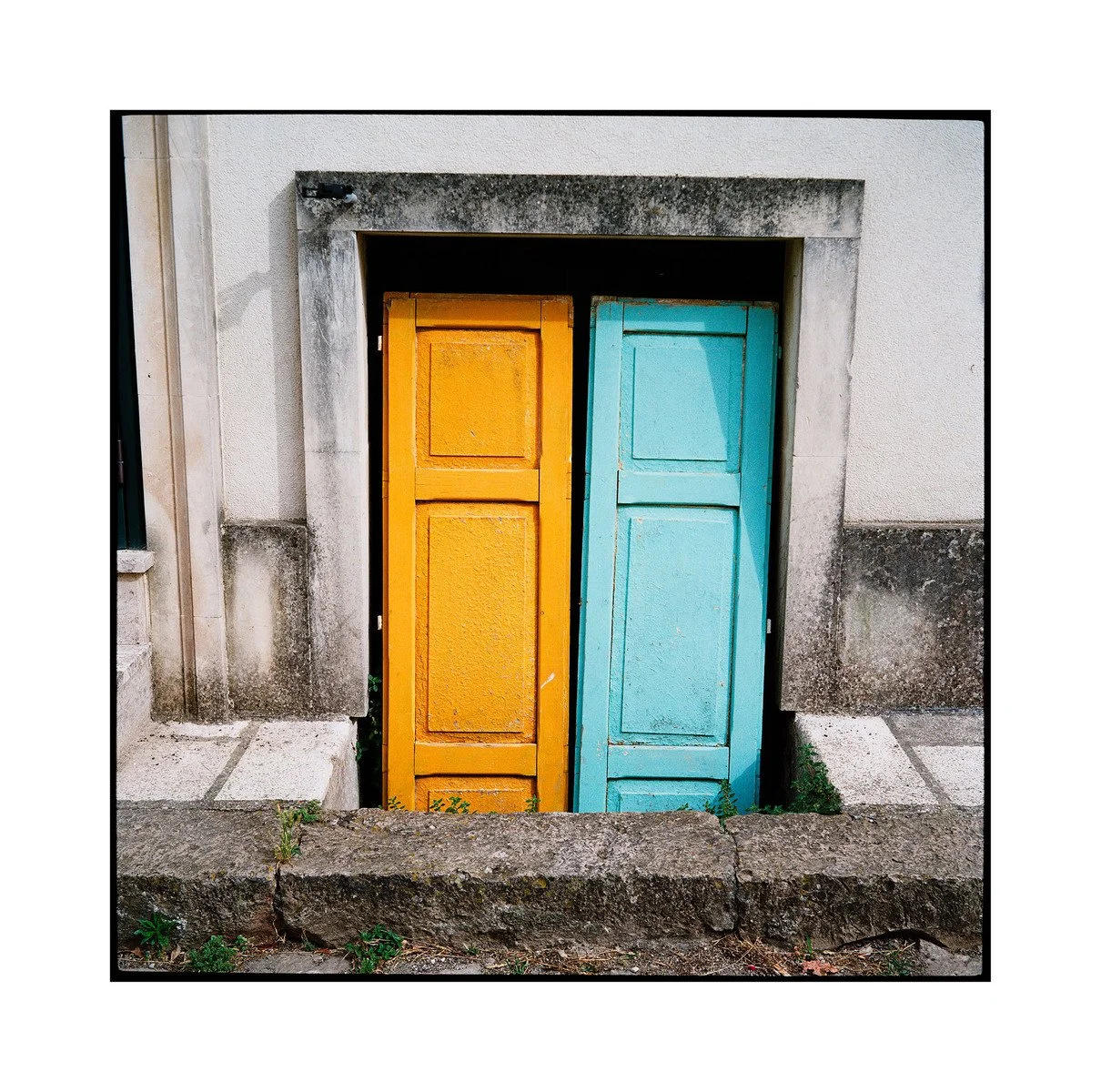
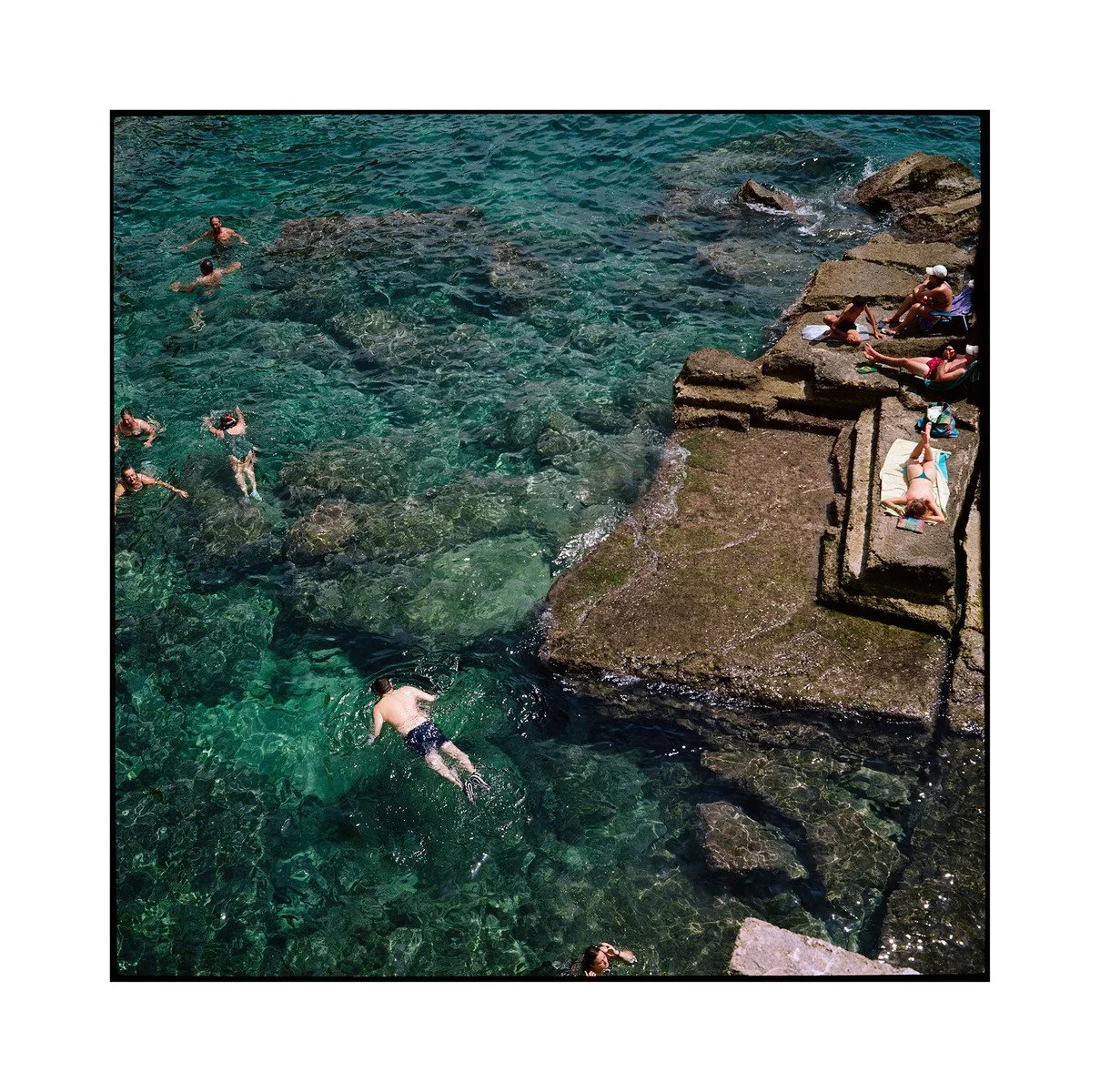
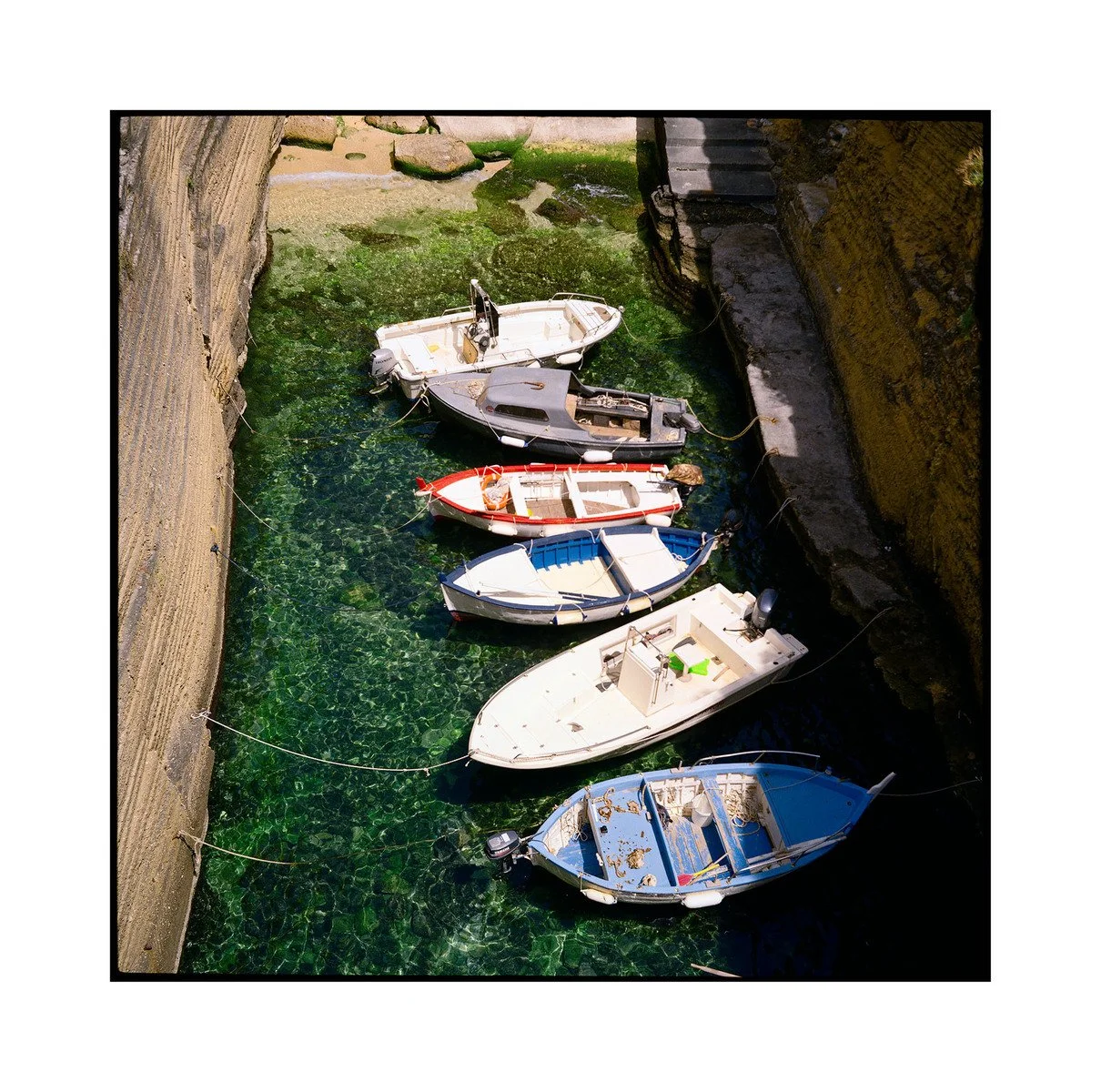
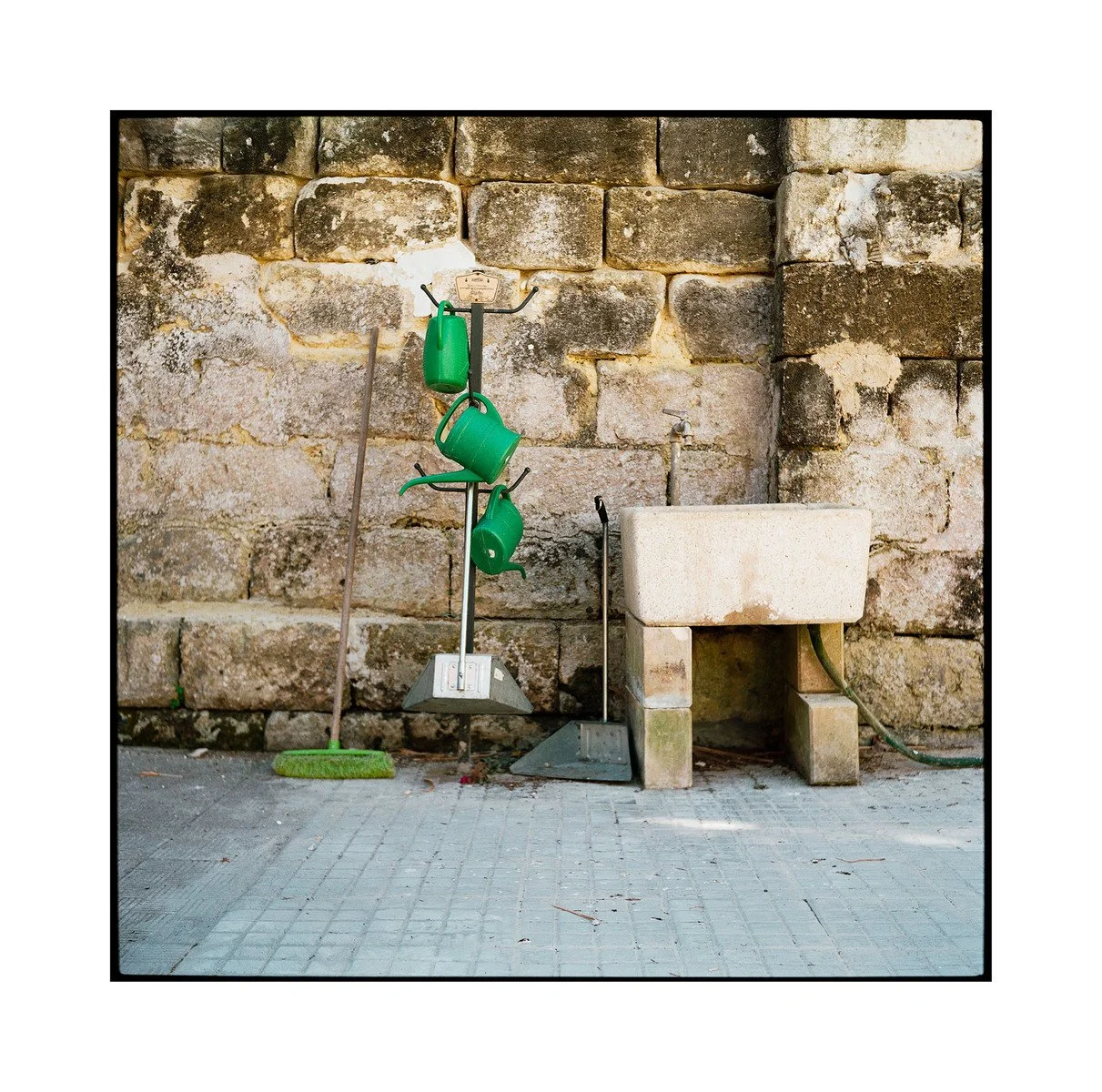
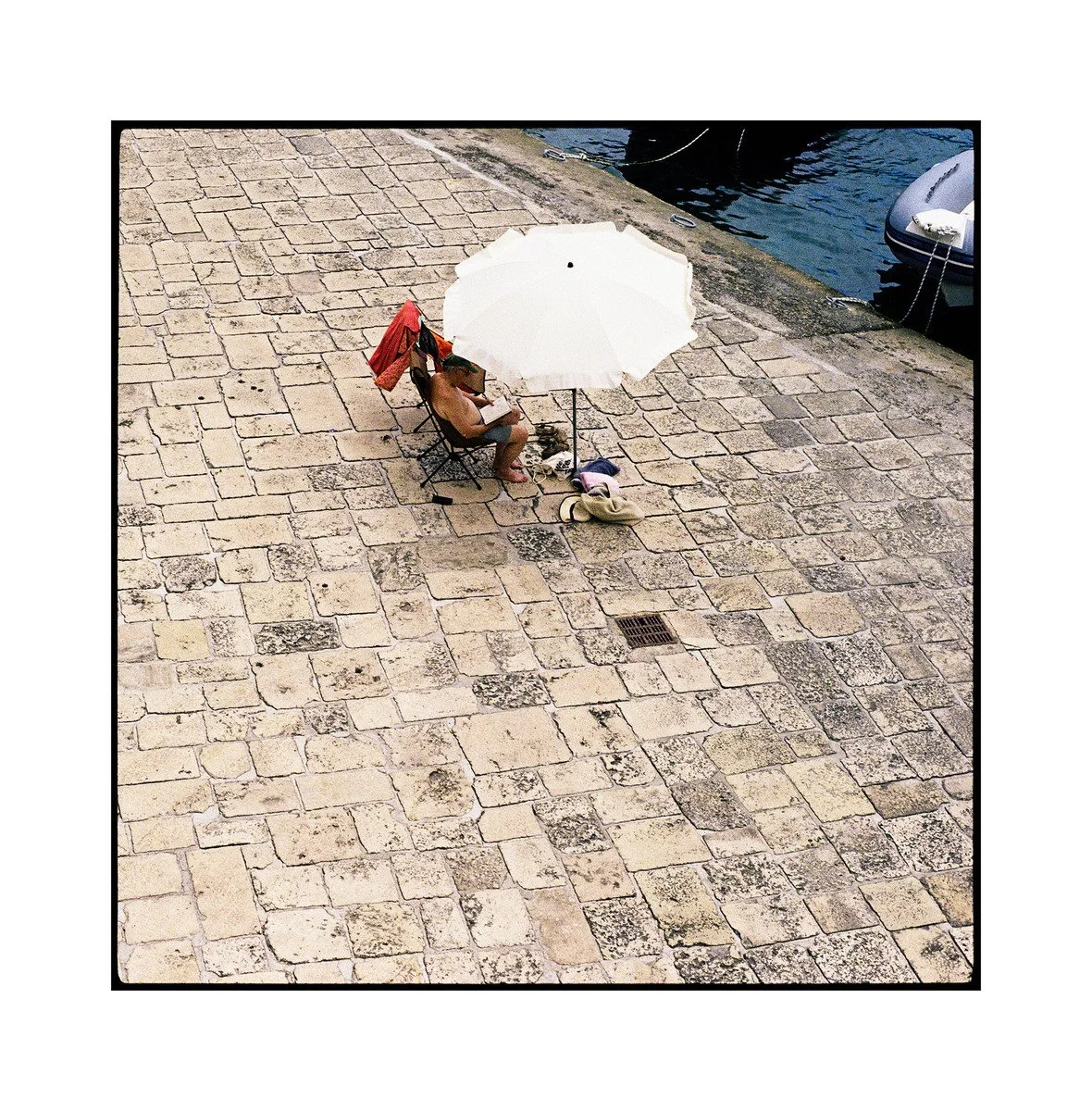
These images were made in the summer of 2026 in and around Cocumola, a small village in Salento, the heel of Italy. I carried a supply of Kodak Gold and two cameras. The first, a Mamiya Six, is a folding medium-format camera made in Japan in the 1950s; unusually, it focuses by moving the film plane rather than the lens. The second, a Nikon F80, is a 35mm camera from the early 2000s, built just as digital photography was becoming widespread.
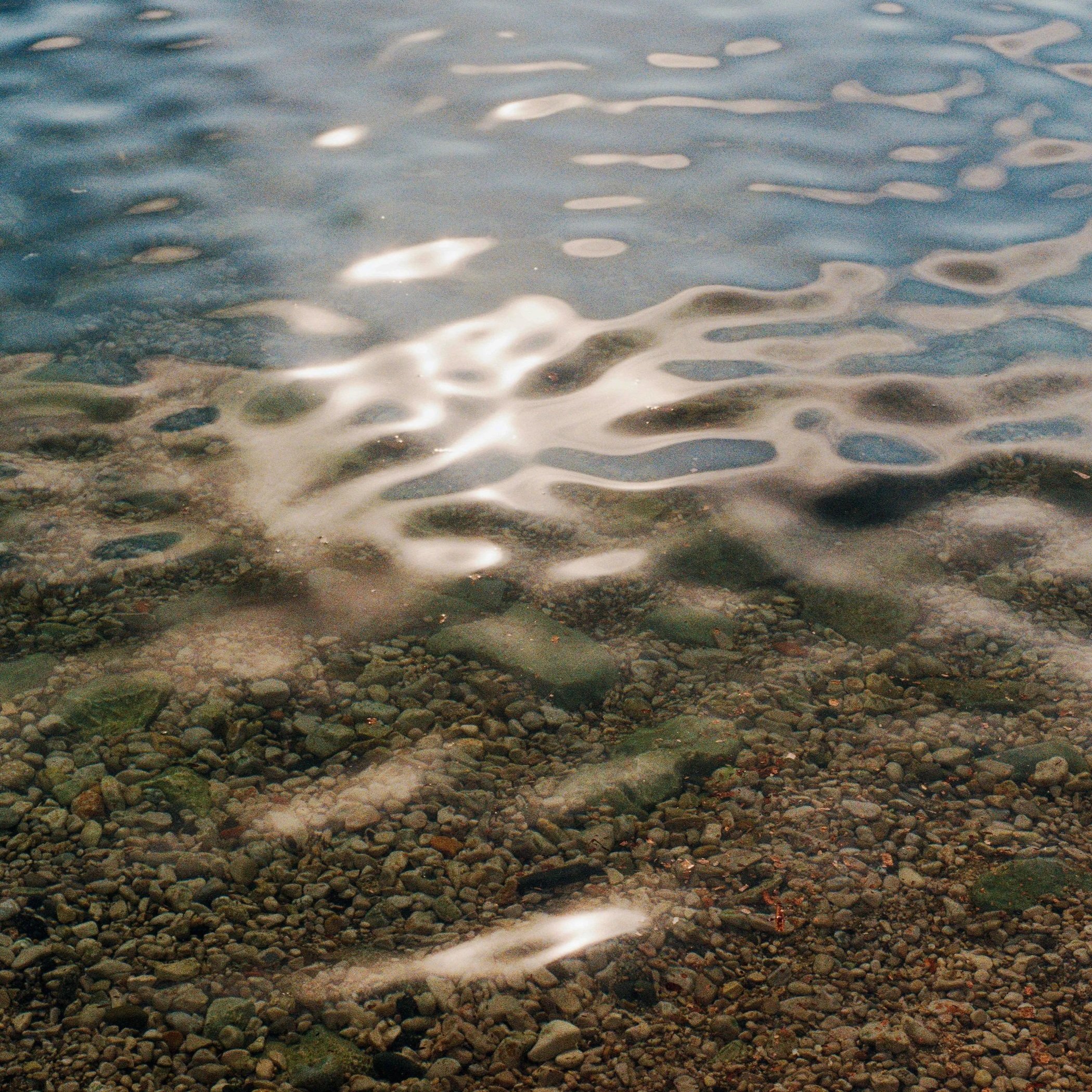
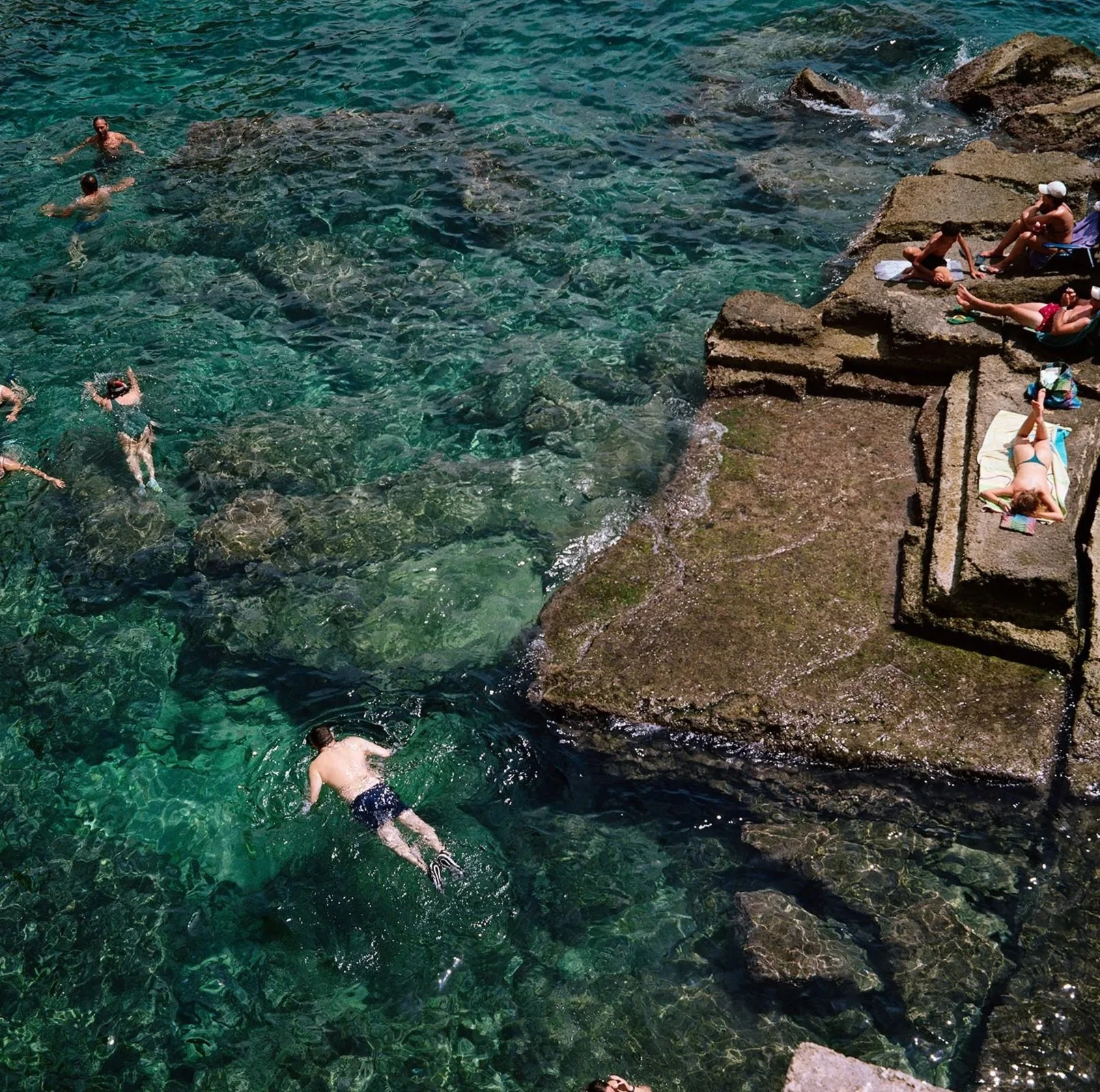
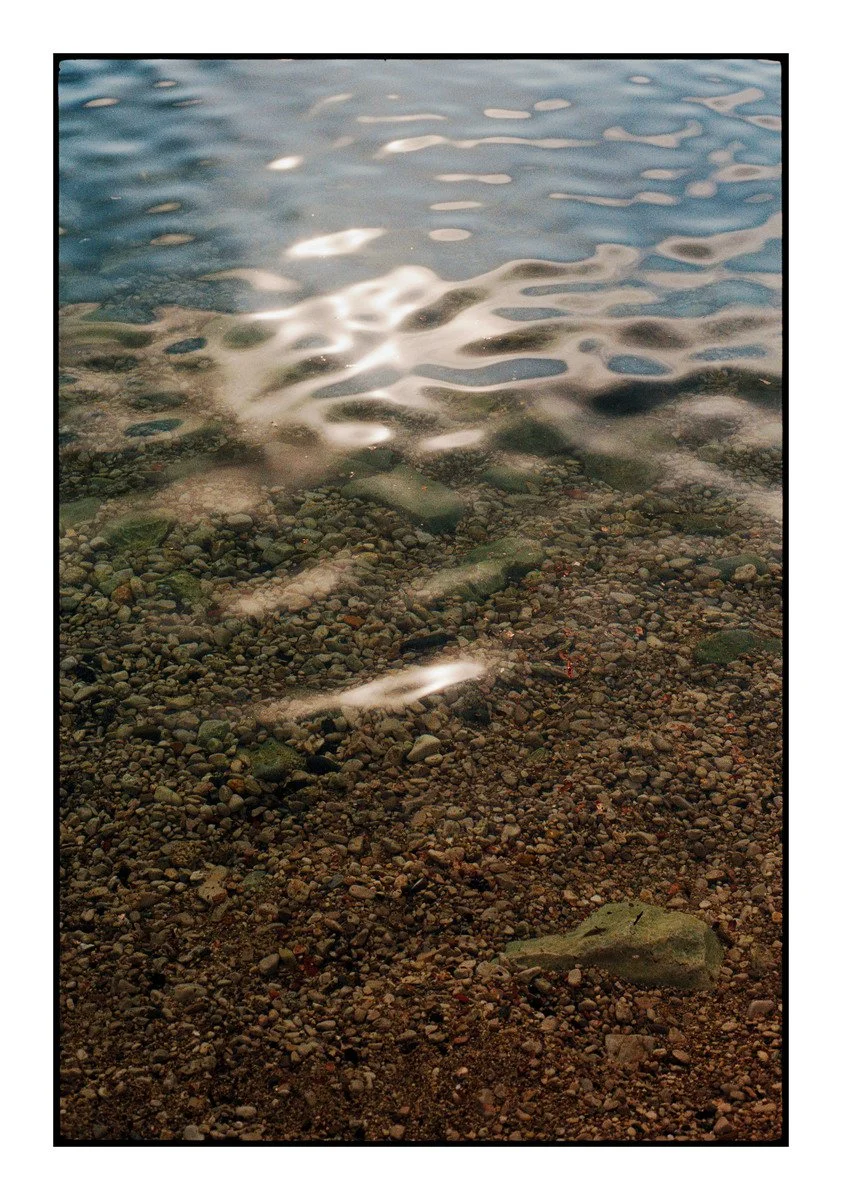
Working with old equipment changes the pace of looking. The Mamiya gives just twelve square frames to a roll, and each one is focused, set and wound by hand. There is no auto exposure, no screen to check, and no second attempt that costs nothing. I found myself waiting more and shooting less, standing in place until a shadow reached a window or a swimmer crossed a patch of clear water. Film also keeps its distance: the pictures could only be seen later, once developed, long after the moment had passed, which made each frame feel less like a record and more like a memory.
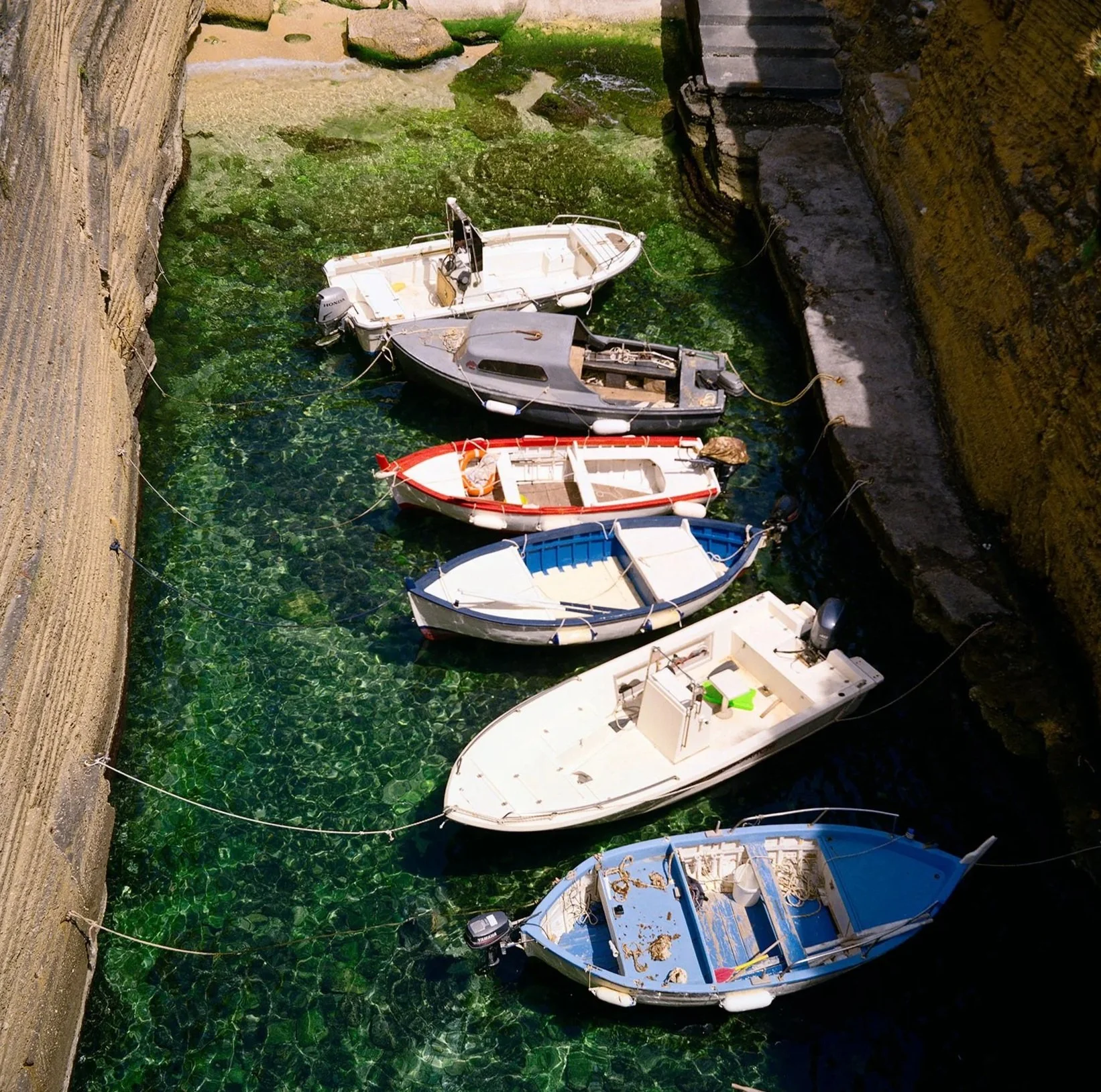
The real subject is the light. Southern Italian summer light is fierce. At midday it flattens white walls and bleaches limestone; in the late afternoon it turns low and golden and finds texture everywhere. Kodak Gold, an everyday colour film, answers that light with warmth and a soft grain that suits the place.
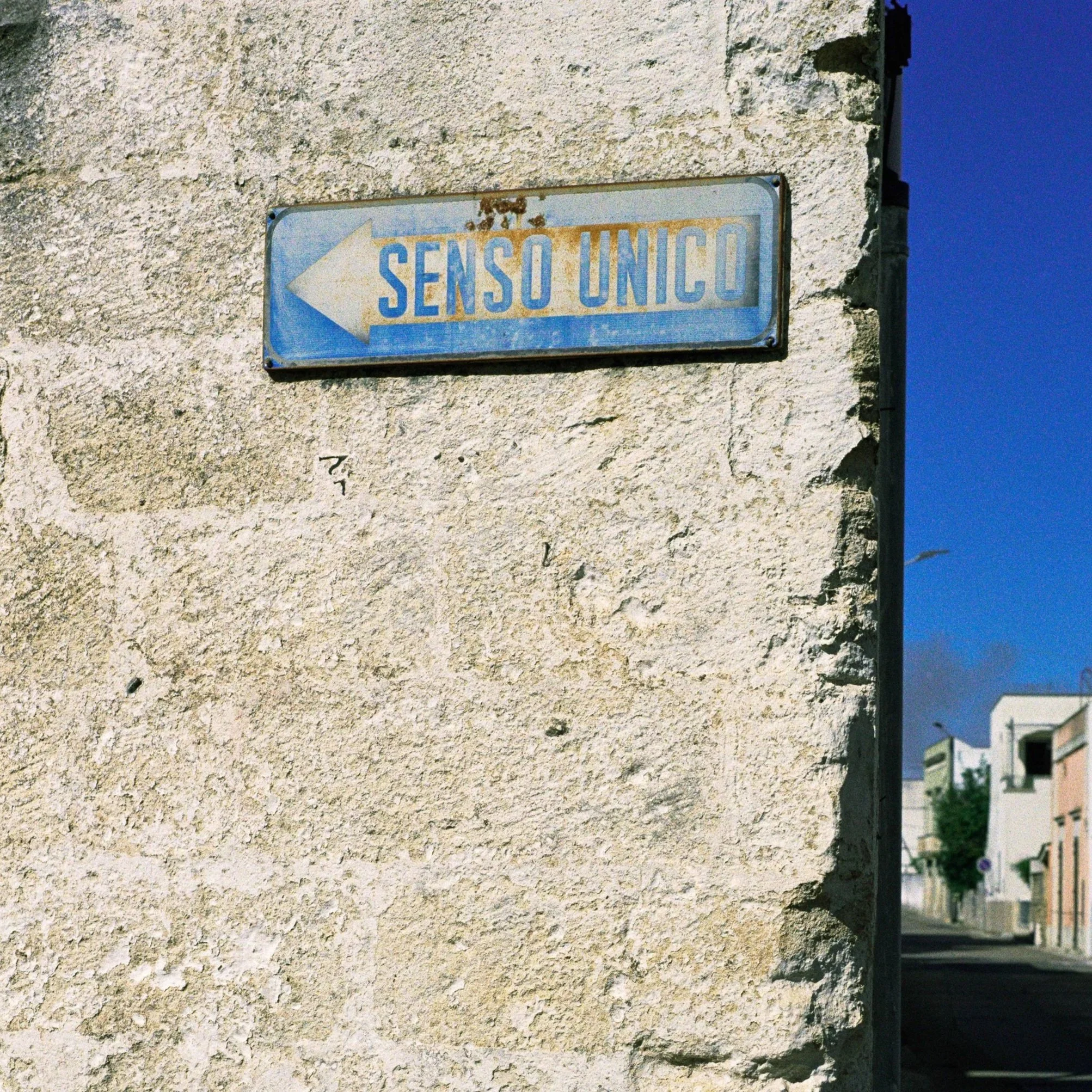
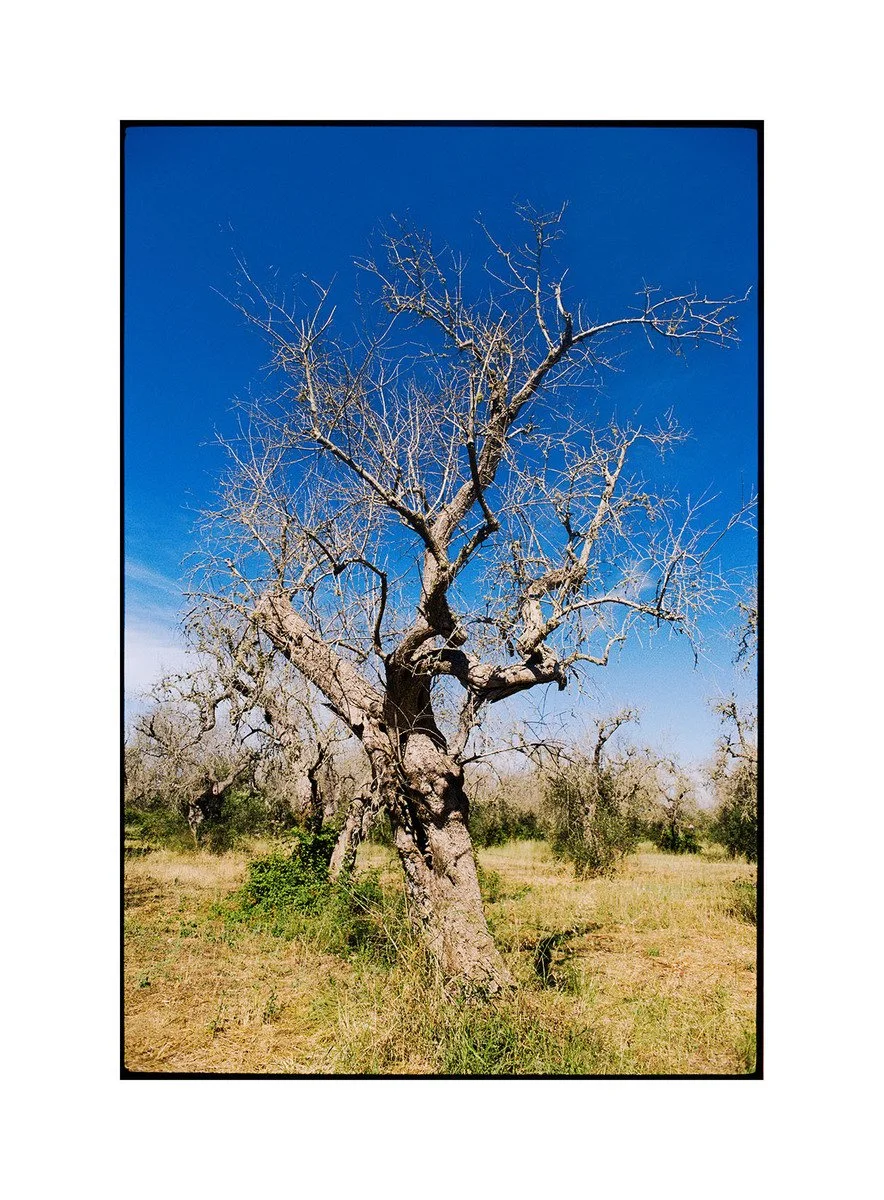
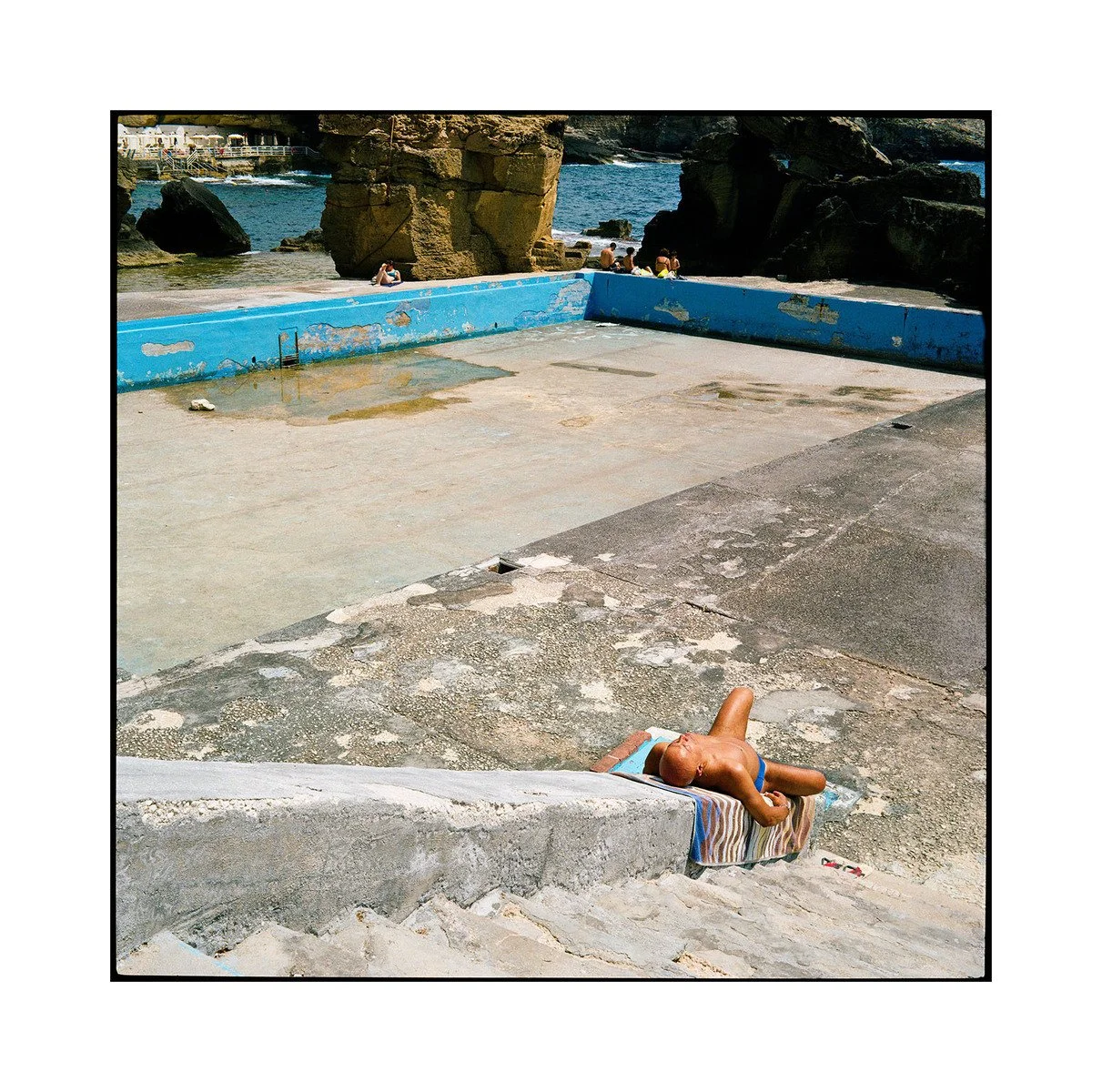
I was drawn less to monuments than to the small overlooked, everyday details: a faded one-way sign, the shadow of a stair rail, two odd doors propped in a doorway, watering cans left out at the cemetery. On the coast I watched people sharing rock and water with an ease that seemed ritual. Inland, olive groves across the region have been stripped bare by disease, a reminder that this landscape is changing. The exhibition begins with an arrow pointing one way and ends at the water's edge, where nothing points anywhere at all.
Nick Orloff, Naarm (Melbourne), 2026
ARTIST BIO
Working across portraiture and architectural photography, Nick Orloff’s practice focuses on creating small, cohesive image sequences. Often presented as short photo essays, these works explore the relationship between people and the spaces they occupy, using form, light, and composition to quietly guide the narrative.
He is particularly drawn to the built environment – its textures, lines, and imperfections – and how it shapes presence and mood. Portraiture sits at the centre of his work, approached with a documentary sensitivity that values restraint, atmosphere, and honesty over overt direction.
Much of Orloff’s photography is made using older cameras and film processes. This slower, more deliberate way of working informs both the rhythm of his shoots and the way stories unfold across images, allowing space for intuition, imperfection, and moments that might otherwise be overlooked.
Exhibitions:
2025 Culture Focus / Mongolia. Group show
2025 Ballarat International Foto Beinnale / Ghosts of Bulgaria’s Past
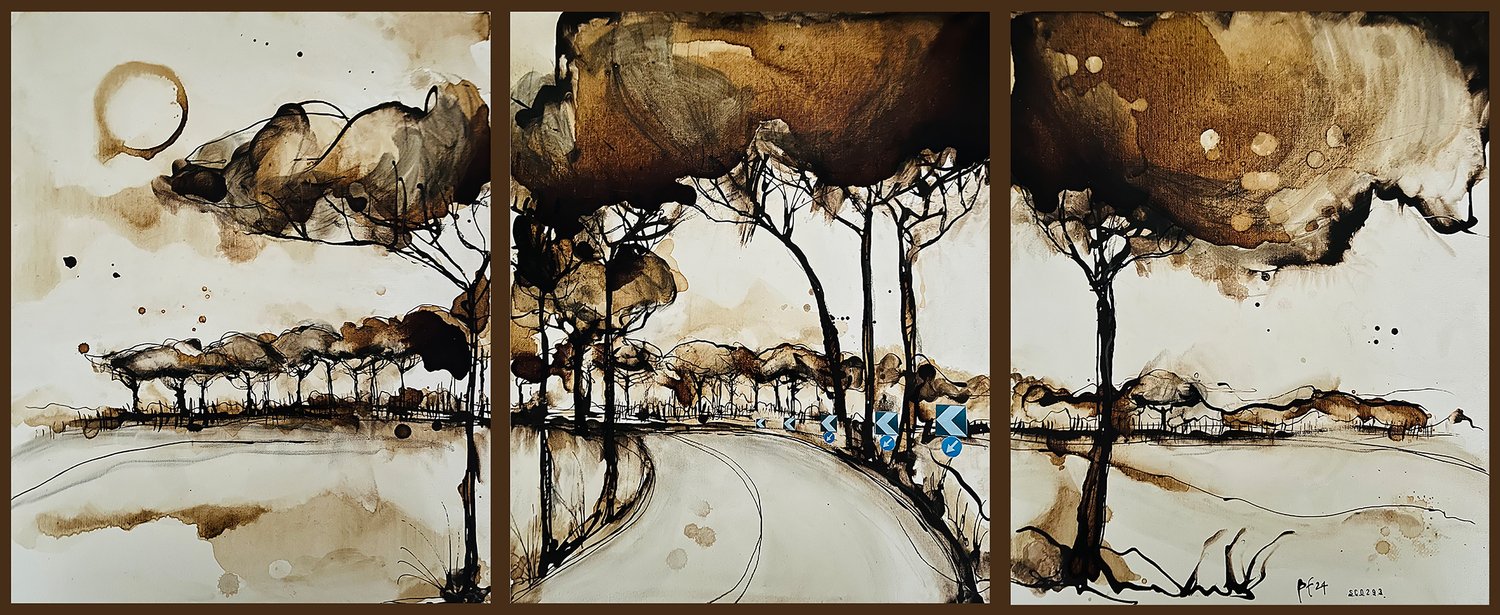
Sepia ink and acrylic on canvas
25 × 20 cm