
Gallery 3
Collective 2026
11 - 22 Feb 2026
Opening night
13 February | 6 - 8 pm
Gallery Hours:
Wednesday – Sunday: 10 am – 5 pm
Curator’s Statement
Rita Sciacca
My intention is motivated by the desire to give voice and agency to a group of female artists to exhibit together. We are a diverse group with individual practises showcasing our diverse style, theme and stories. Our work is not regulated by a theme or institution, but in a shared experience to create, play, explore and make. I have a very long history with some of the artists and some are new connections. It has been exciting for me to bring them together through this shared experience.
Making Art is a way of connecting, communicating, expressing beliefs, recording the simple things from daily life or expressing ones internal world, the world of the imagination and play, and sometimes exorcising emotion. It can be a way of documenting our journey through our own personal symbolic language.
So I welcome the viewer on this journey. I hope there is something to connect with that touches the heart and imagination of viewers, that there is something you as the viewer can share with “Collective 2026” Exhibition at Red Gallery.
Artists
Alice Nixon | Annabel Nowlan | Deb Taylor | Gillian Haig
Kat Rae | Jandy Paramanathan | Rita Sciacca
Heather Shimmen (Represented by Australian Galleries)
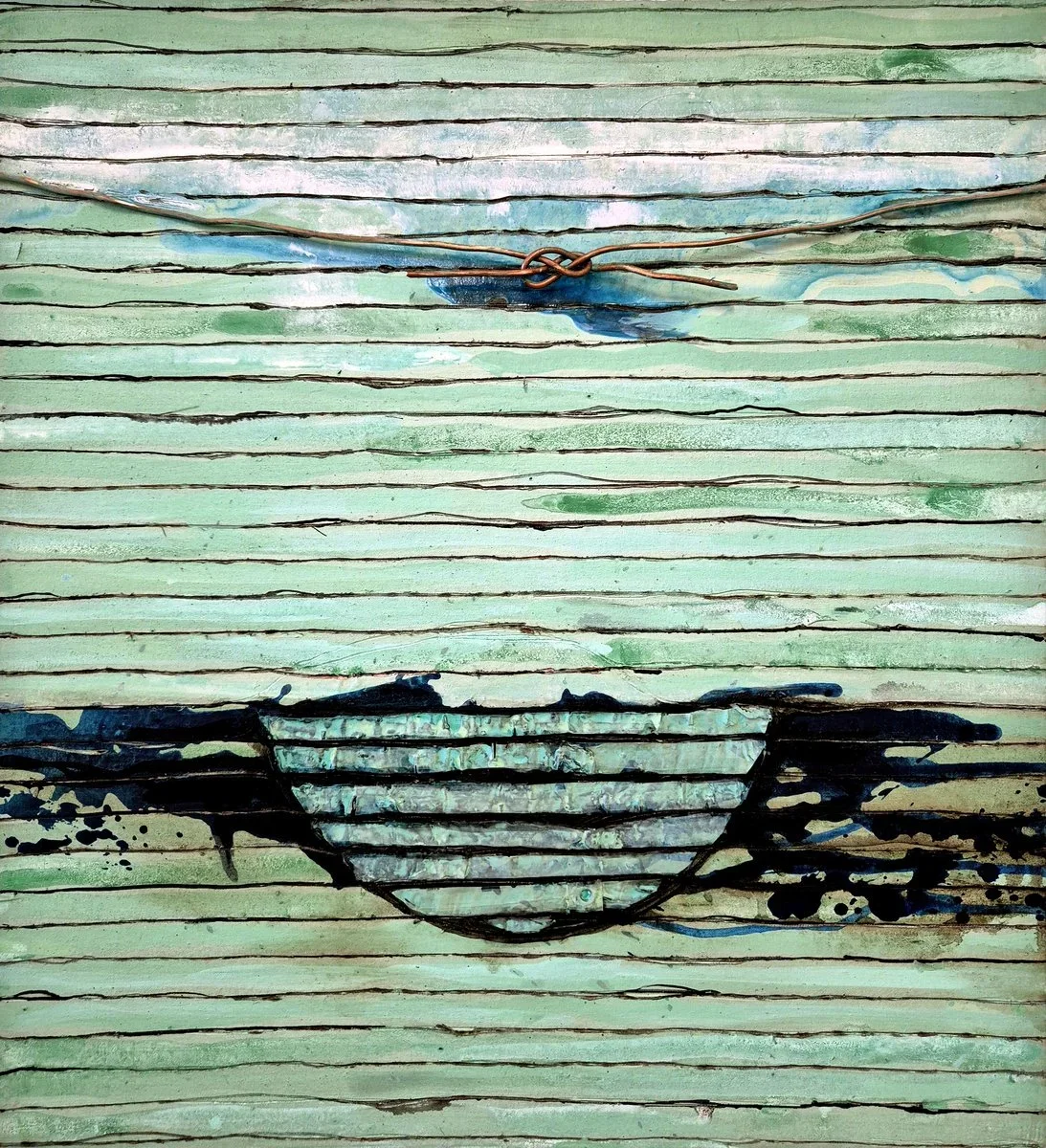
Annabel Nowlan
Artist Statement
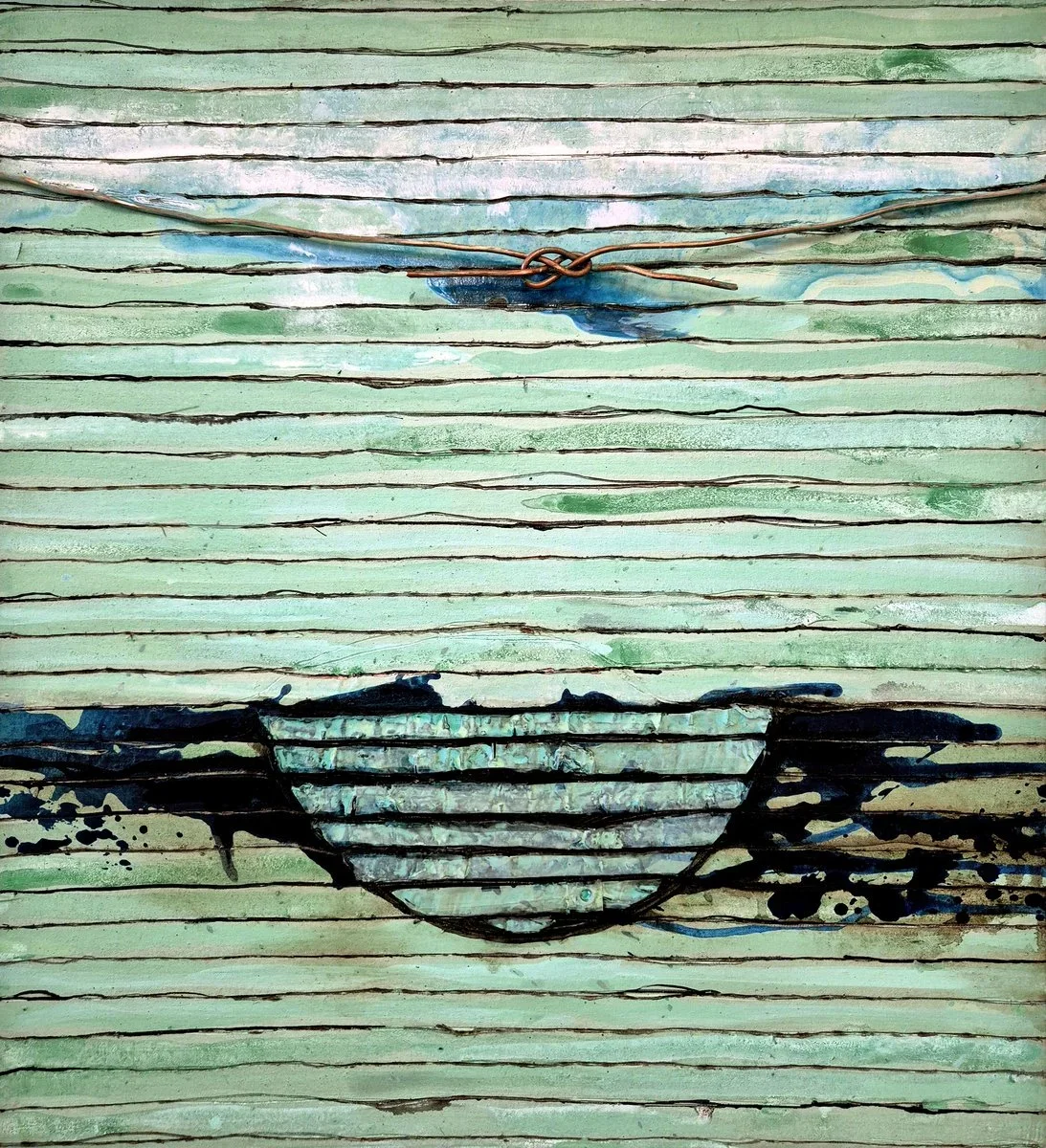
In her art practice Nolan seeks to illuminate, rather than illustrate, relationships of place, history. Her personal experience and ongoing connection with the land manifests itself as a visceral instinctive attraction to materials and surface quality. These mixed media compositions celebrate the rich vocabulary and nuances of the tamed and untamed environment and comment on our often vexed relationship with it.
Artist Biography
Annabel Nowlan was born on a farm in South West NSW, she is predominantly a painter, although increasingly she works across a range of mixed media disciplines. Nowlan has exhibited consistently for thirty years, in Sydney and Melbourne, Regional Galleries and numerous group and artist run spaces. She studied at the National Art School in Sydney (1985-88), COFA UNSW (1990-92), and completed a Masters at the Victorian College of the Arts in 2002.
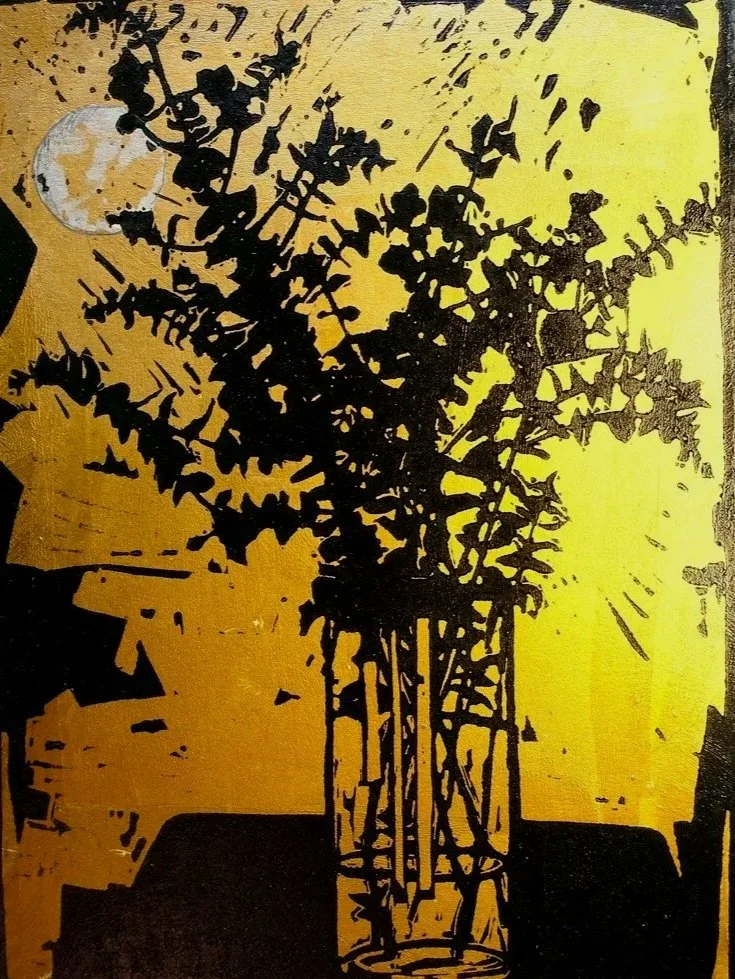
Alice Nixon
Artist Statement
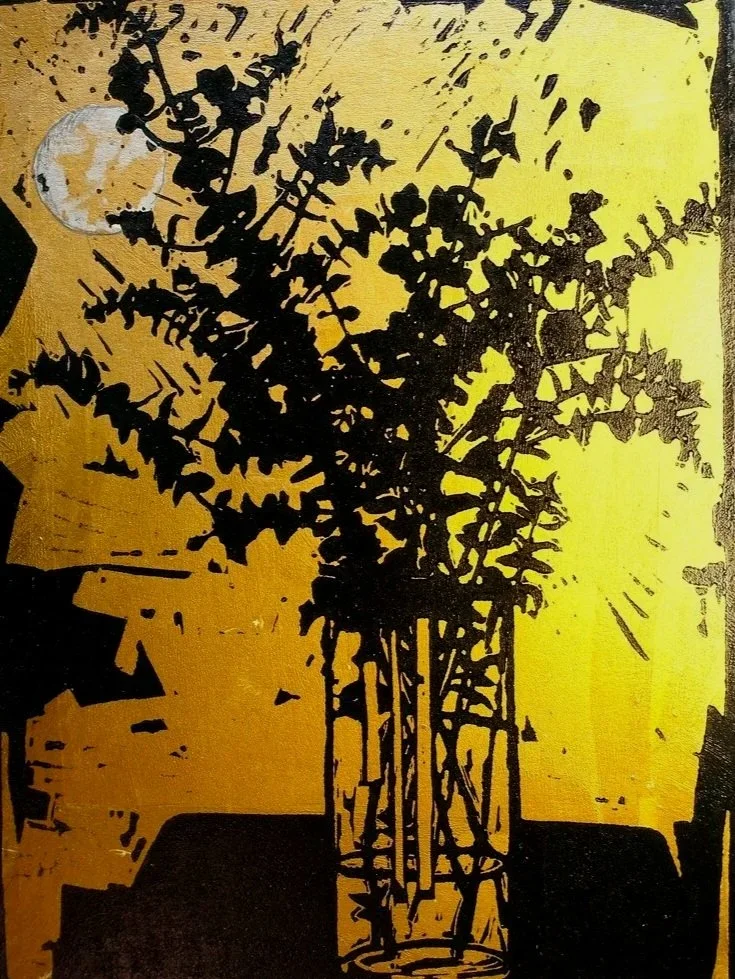
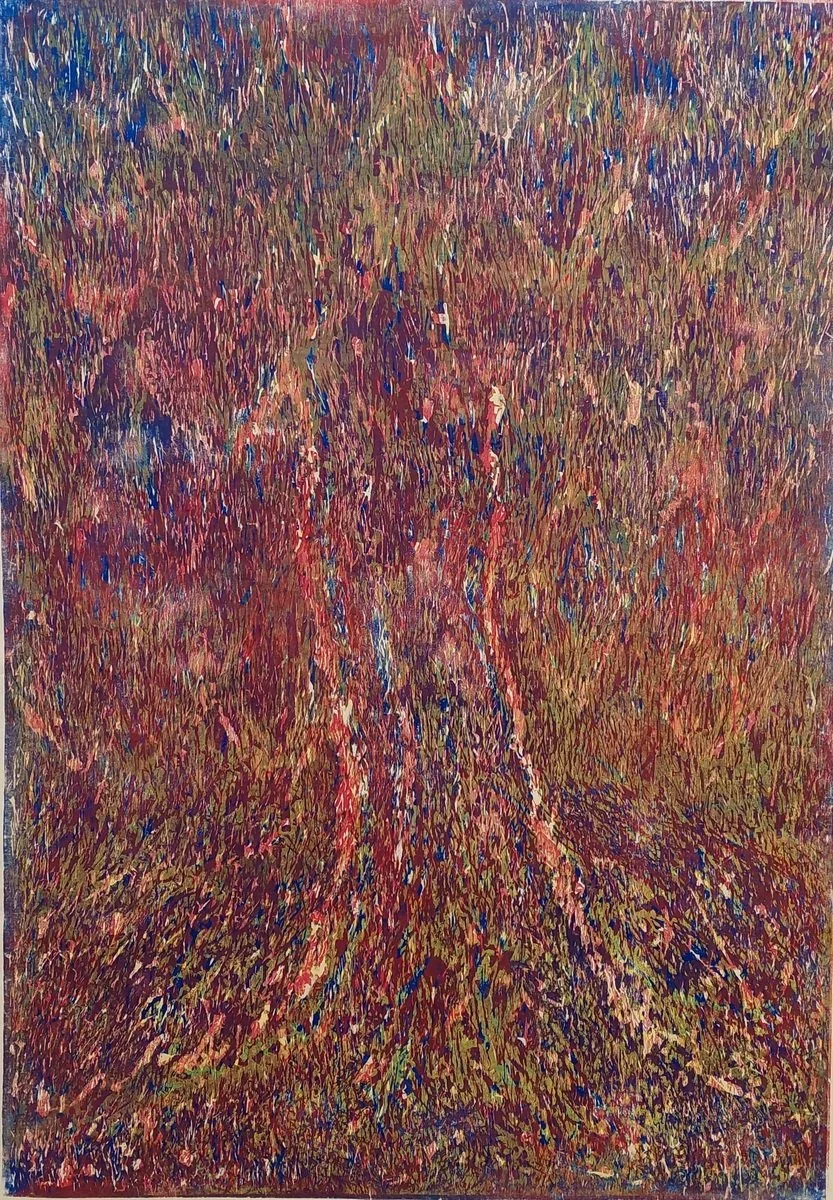
Alice Nixon is drawn to relief printing for its reliance on strong contrast and the discipline of working without any tonal variations. Lino is an unforgiving medium—every cut is permanent—and cannot be undone, which is part of its appeal to Alice. Through bold, directional cuts, Alice aims to create a sense of movement. She is not interested in photographic precision; instead, uses the visible chatter to evoke energy and texture.
Artist Biography
Alice Nixon has been a practising artist for many years and has a Fine Arts degree and a Postgraduate Diploma in Sculpture. She has exhibited in solo and group shows across Australia and internationally.
Alice is best known for her sculptural practice, but printmaking has always been an integral part of her work. She has received numerous awards and commissions, and her work is represented in public and private collections. Major commissions include sixteen bronze sculptures for the City of Merri-Bek; large-scale pieces for the City of Whitehorse; lighting works for Northcote Town Hall; six large sculptures for Crown Casino Melbourne; and works for the Southgate precinct and St Kilda council.
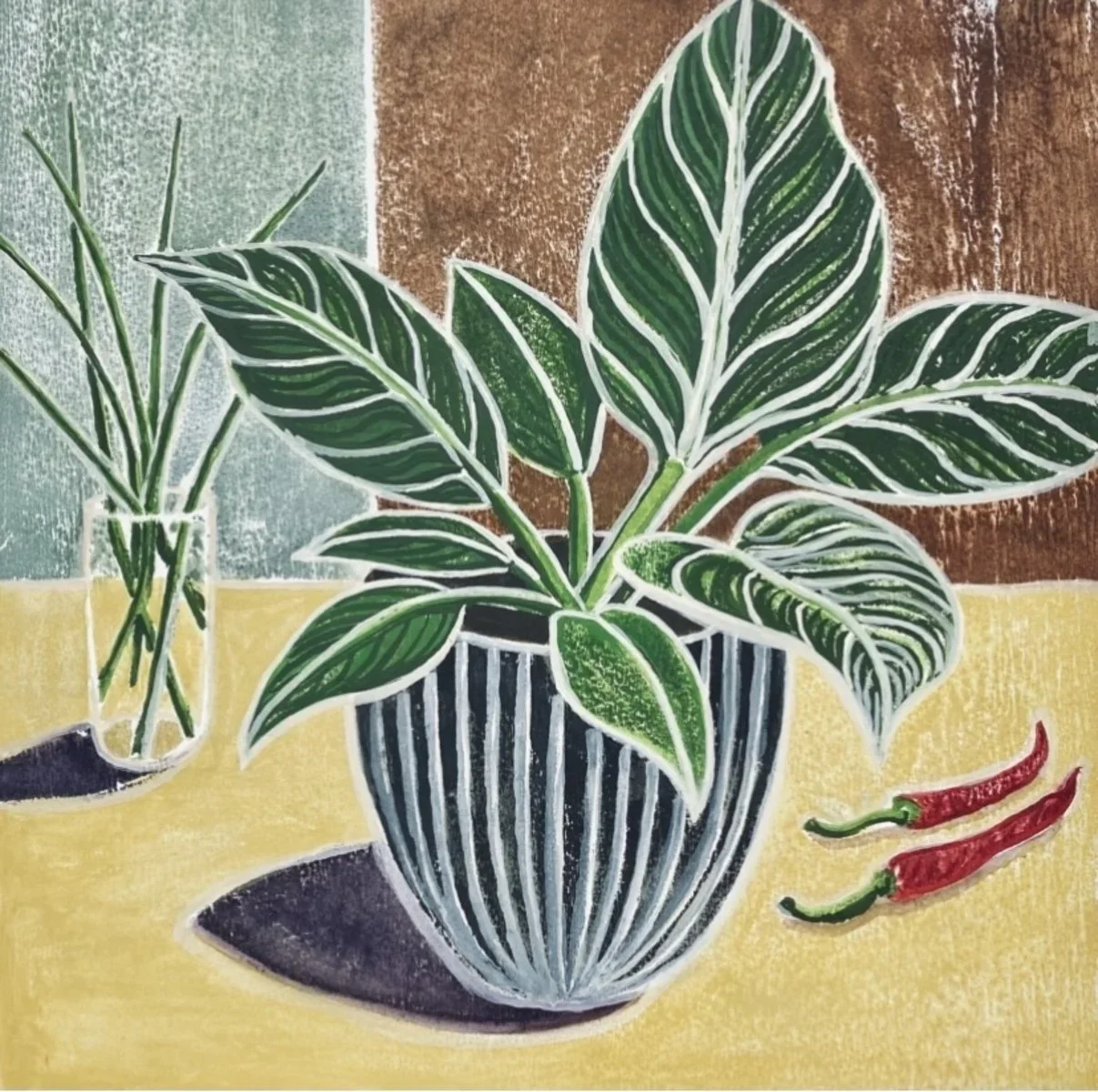
Gillian Haig
Artist Statement
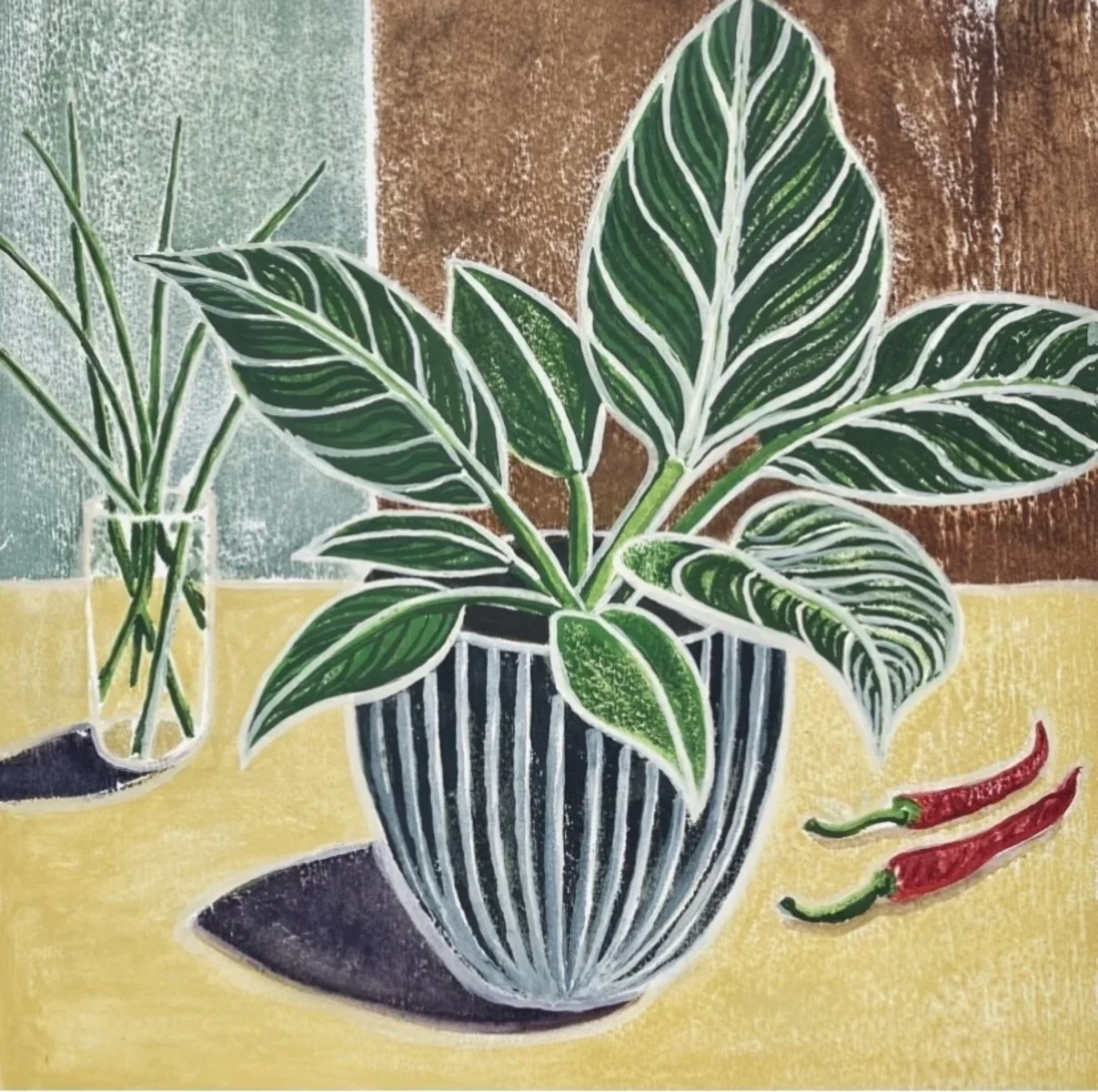
Gillian’s artworks draw on the quiet intimacy of domestic still life-plants, vessels, everyday objects observed and reassembled through drawing and print based processes. Familiar forms are simplified and repeated, allowing pattern, colour and surface to carry as much meaning as representation. The textured surfaces and layered marks reference both handcraft and memory, holding traces of touch, use and time.
Artist Biography
Growing up on a sheep farm in East Gippsland has given Gillian a strong connection to the land and nature. Gillian continues to be inspired by her environment as she now lives and works on the Mornington Peninsula.
Gillian studied painting at RMIT where she was inspired by Australian and American Abstract Expressionism. This influence can be seen in the way she layers pigment and has developed a language of symbols and gestural mark making that conveys energy to her forms and pictorial strength to composition.
Gillian was awarded the RMIT Travelling scholarship where she was able to study European artists and art practice.
In 1990 Gillian moved to Red Hill where she began painting vistas of the Mornington Peninsula. Inspired by the abundance of produce grown in the area she concentrated primarily on still life subjects using watercolours, oils and acrylic. Over time she established herself as a respected community Artist, exhibiting her work widely, running a local gallery and shop, and completing numerous commissions, prints, and portraits. She has won many local awards during this time.
Gillian continues to experiment with concepts, form and materials.
Gillian is intuitive in her representation, her work is lively and full of energy, emphasising immediacy and natural rhythm.
Gillians work is represented both in local private collections and internationally.
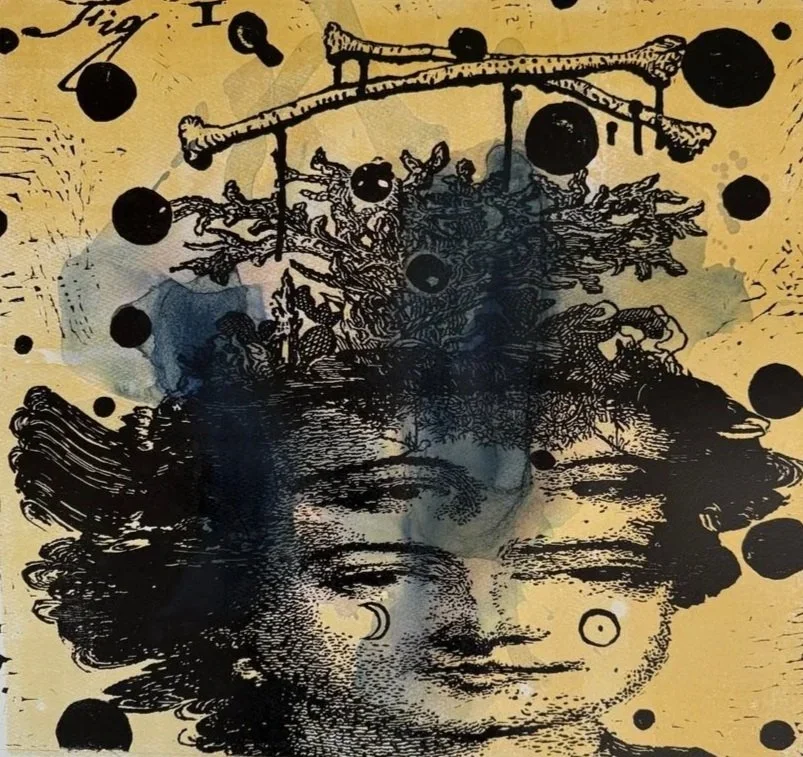
Heather Shimmen
Represented by Australian Galleries
Artist Statement
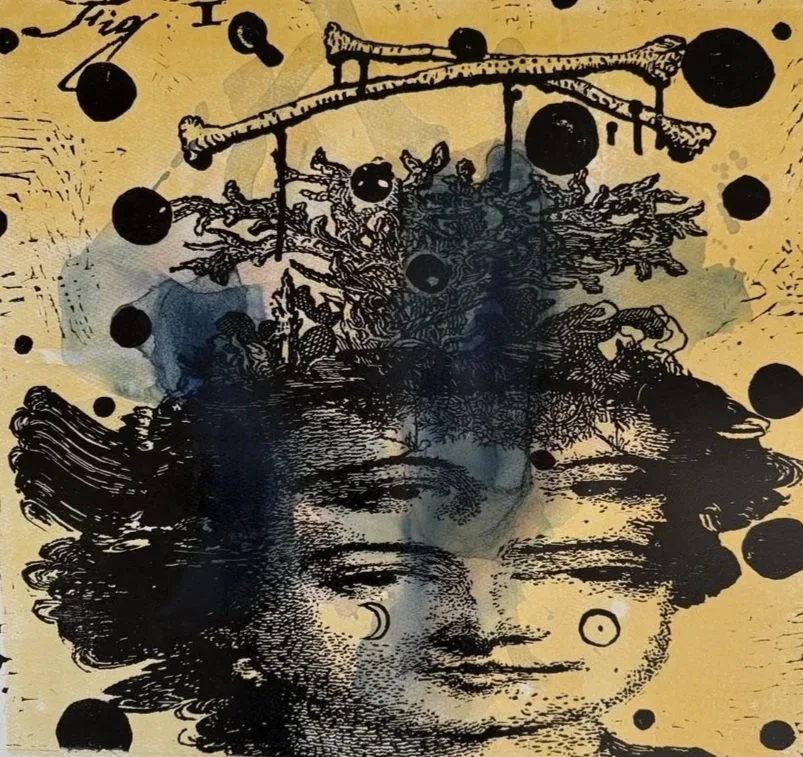
Currently the themes found in Heather Shimmen’s work have been initiated by true but preposterous tales whose origins can be traced back through ancient myths and legends. The resulting stories translate as a series of portraits and cameos that evoke the past and hint at a possible future. Distortion and refraction within the images are but part of a continued exploration of relationships and interrelationships between the female form and their world.These female protagonists are extraordinary creatures who do not live in a cocooned place but in an uncomfortable domain, woven throughout mythological narratives.
Artist Biography
Heather Shimmen was born in Melbourne and her career spans fifty years. She is both a painter and printmaker. She has held twenty three Solo Exhibitions and been in over three hundred group shows, some travelling throughout Australia and Internationally. She is now living in South Gippsland and is represented by Australian Galleries Melbourne .
Deb Taylor
Artist Statement
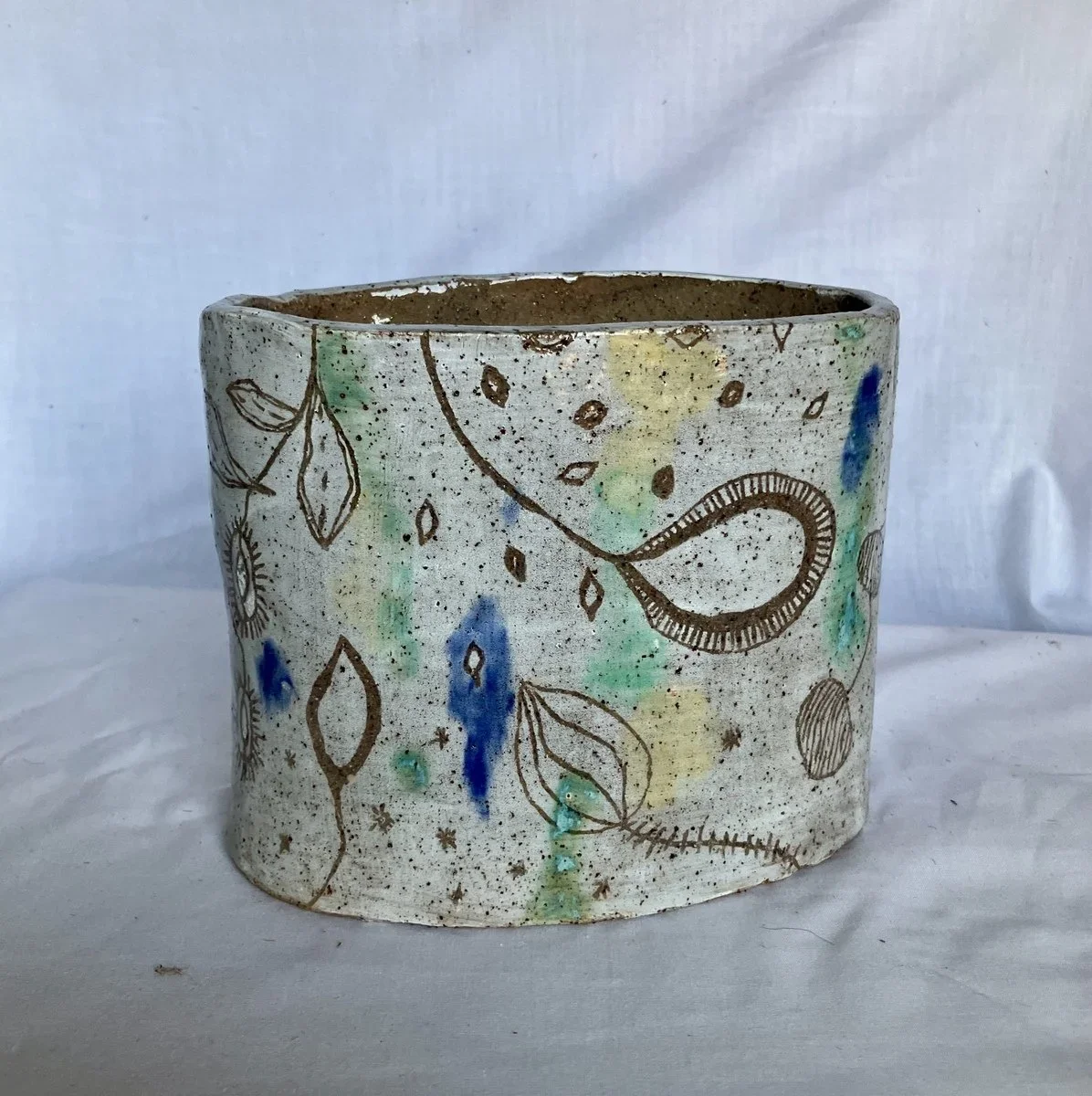
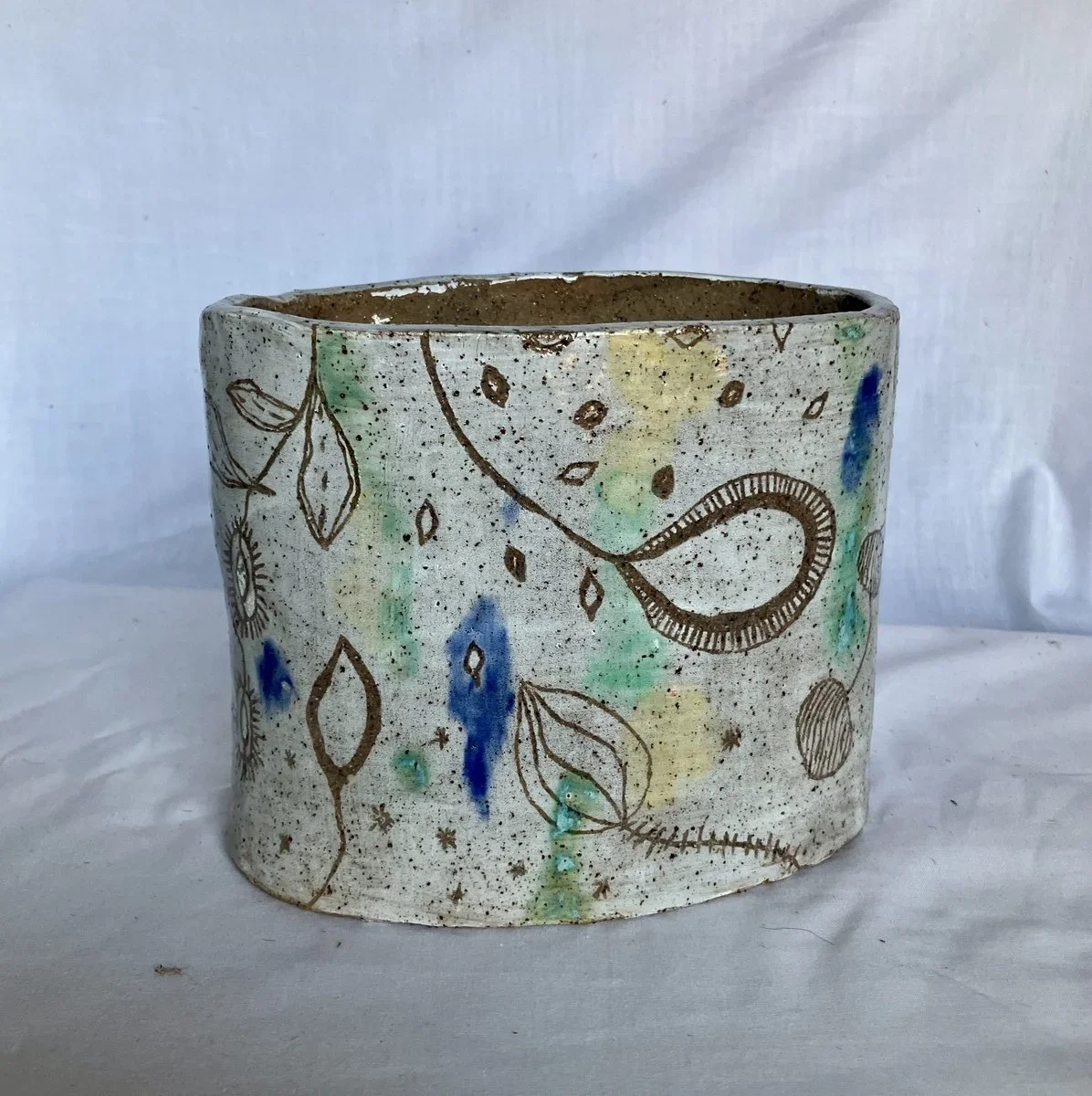
Deb Taylor's three collections of ceramics explore line as a living presence: drawn, carved, mirrored and fluid, line appears as botanical marks, as measured symmetry through the softened traces of glaze moving over the surface. Together, these works consider line not only as decoration or structure, but as evidence of growth, gesture, and touch. Each piece holds a moment where intention meets material.
Artist Biography
Deb Taylor is based in Ocean Grove and works in her home studio, having moved from Melbourne about seven years ago. She creates organic abstract paintings, drawings and collages inspired by observations of shape, colour, texture and line in nature.
A few years ago she started attending a ceramics studio exploring the possibilities of three-dimensional form through hand-building. From creating small bud vases with minimal glazing, she eventually started to make larger vessels. Whilst keeping the glazing uncomplicated she began adding line work using the sgraffito method introducing an illustrative element to the surface of the forms.
Rita Sciacca
Artist Statement
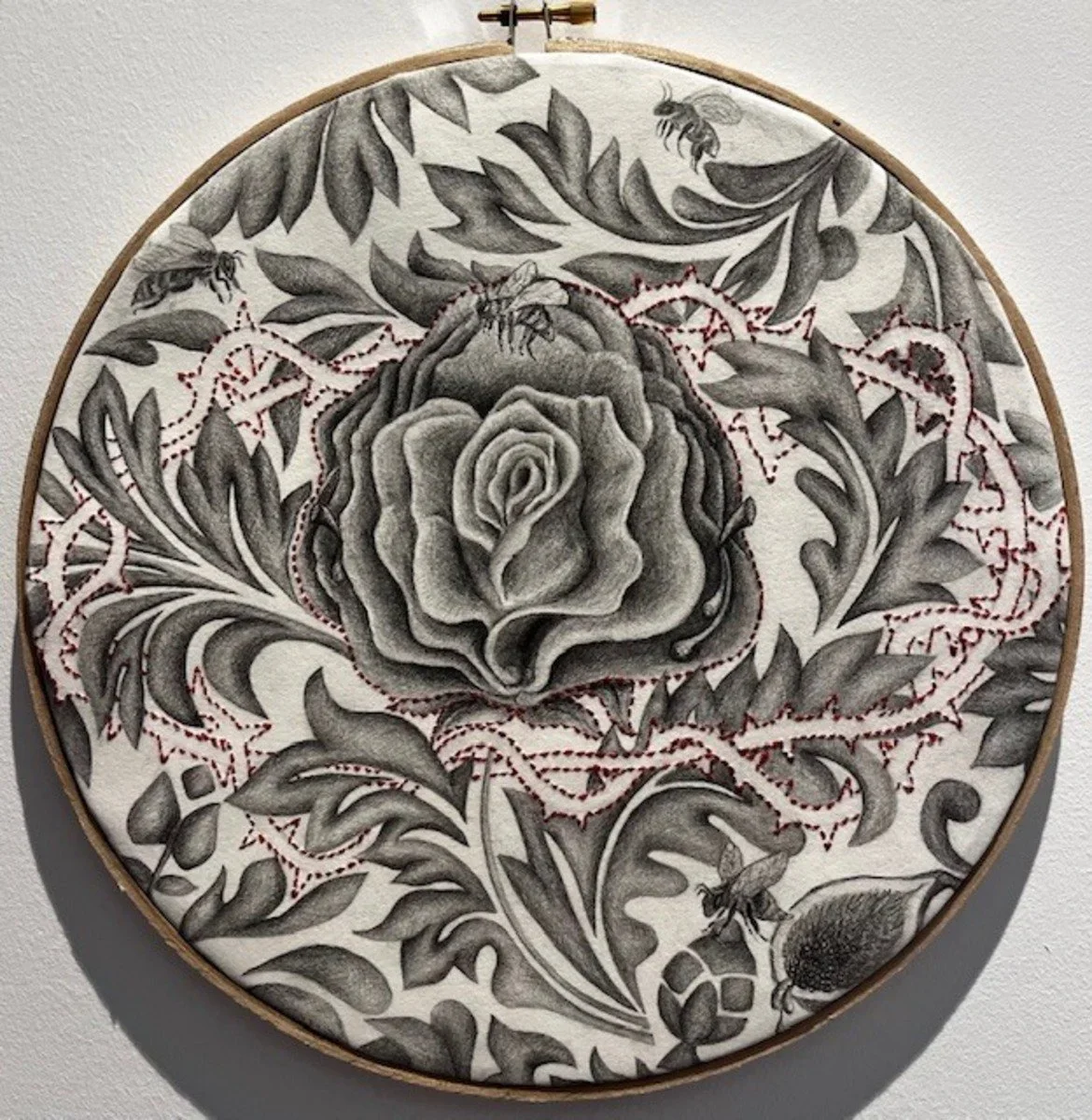
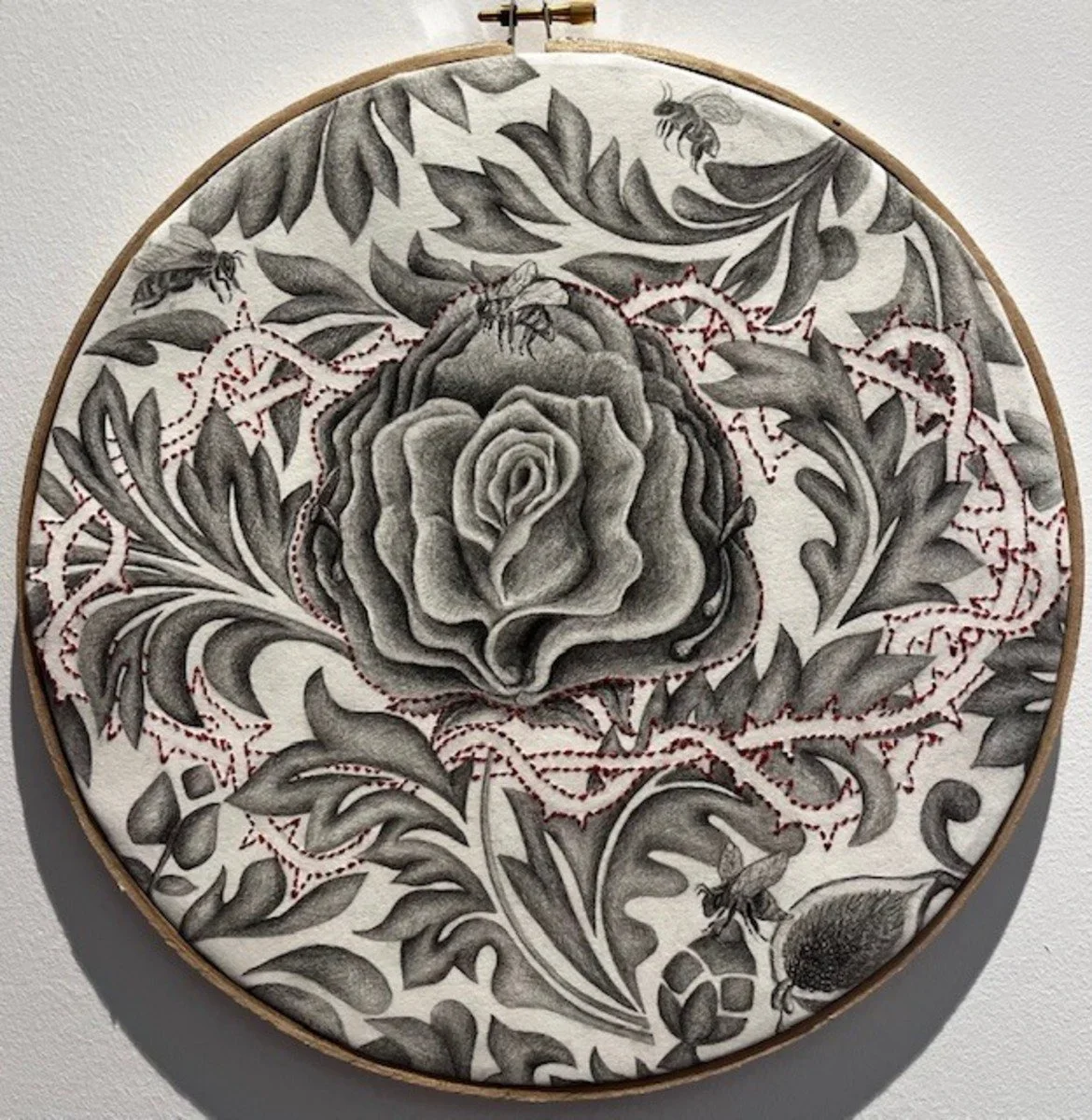
Rita’s underlying interest is the construct of the feminine, of gender, of the influence of mythologies and symbolism that influence the way we see the female body, and construct the ideas, perceptions of the feminine. These themes underlie her work. Rita uses textiles, floral motifs from Renaissance art, wall paper designs and embroidery to reference perceptions of the feminine. Using embroidery thread and running stitch Rita references the tradition of women’s work for religious purposes. The red thread for the symbolism of blood and the female cycle, regeneration and renewal. The thread is also connected symbolically to many mythologies as a symbol of time and female agency, of story telling and connection.
Rita’s use of the vitrine to contain her work suggests a reliquary and invites the viewer to peer into the work. In this series of drawings on Saints Rita explores the burdens of a childhood growing up with the expectations of virtue embodied in female saints. Rita questions the cultural and historical ideals that are considered “suitable” feminine ideals of gender. There is a Christian tradition that considers women’s bodies as sinful, impure, and imperfect, where Female saints are often portrayed as submissive. Sanctification seems to be equated with controlling and reducing the body through obedience and surrender, which is seen as a desirable attribute, encouraged to be imitated by the faithful.
Notes on the Saints and their story.
Saint Agatha from Catania Sicily. from the 3rd - 4th century resisted the advances of a Roman Prefect.
In some stories she was stretched on a rack to be torn with iron hooks, burned with torches and whipped, her breasts were removed with tongs and this torture can be seen as a sex specific alteration, mutilation of the body.
Her story becomes the ideal of the virgin martyr, who remains true to her virginity and god.
Saint Lucy. 200-300AD The single fact upon which various accounts agree, is that a disappointed Roman suitor accused Lucy of being a Christian. She was tortured and had her eyes gouged out.
The emblem of eyes on a cup or plate apparently reflects popular devotion to her as protector of sight. Her name, Lucia from the Latin word "lux" means “light”.
Saint Rita of Cascia. 1381 – 22 May 1457) Italian widow and Augustinian nun, known as the patroness of domestic abuse victims. She was married at age 12 and a victim of marital abuse.
She is depicted with a stigmata on her forehead, a symbol of her penance, or a crown of thorns, and holding a large crucifix often with roses. Roses and bees are symbols associated with industry and virtue. Miracles of the Rose and figs are associated with her sanctification.
Artist Biography
Rita was born in Italy. She has grown up with Saint day celebrations and observations. She is not religious but deeply affected by her experiences as a child and adult in the observations of Religious festivities whilst living with her mother and family. Whatever the season there was always a Saints day to be observed and the full immersion of the event that affects the senses and memory.
Adherence to tradition and faith has not only given Rita her name, but influenced her journey to question the strict confines of religious authority. In installations, printing, sculpture and drawing she has played with process, technique and materials as a way of conveying and giving voice to these themes.
It is storytelling and exploring processes and materials to communicate ideas that fascinates, engages and attracts her curiosity.
Jandy Paramanathan
Artist Statement
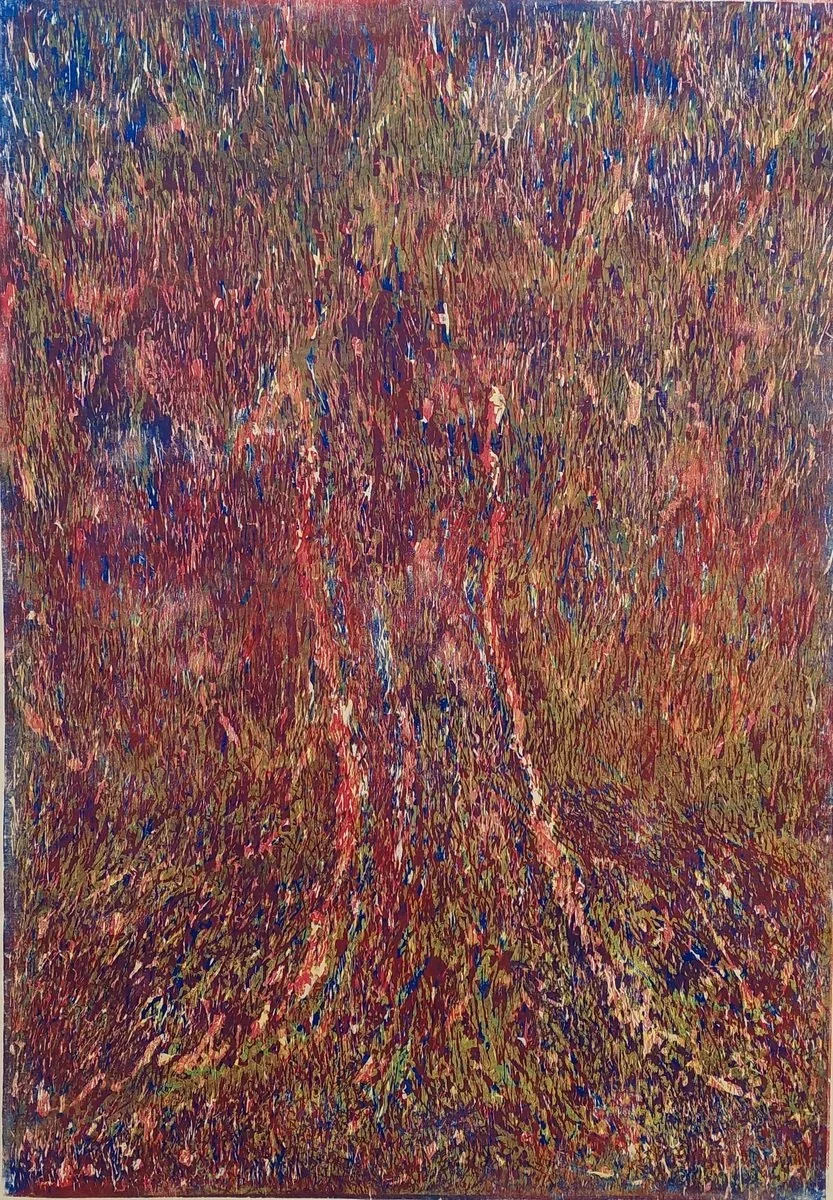
Jandy finds woodblock printing by hand allows flexibility to work with the variances within the process.
She values some level of unpredictability in the printmaking process and enjoys the action of carving the image and working with the wood surface and grain. The image often starts spontaneously, carved from a roughly drawn outline on the plywood, then develops and changes throughout each printmaking stage. Printing by hand allows tonal changes to be made through varying hand pressure on the paper which is placed on the inked block. As this process continues, the image appears through the back of the semi-transparent rice paper. It is only in the final stage when the paper is pulled from the block that the result is known.
Artist Biography
Jandy is a Melbourne painter and printmaker who has continued her practice since training in Fine Art, RMIT since the late 1970’s. Finding aesthetic value in daily scenes with life-affirming qualities, Jandy works with commonplace imagery such as household objects, local streets, and rural and overseas subjects.
In visits to the Mildura district, Jandy retraces childhood visits to her maternal grandfather’s farm of grapevines and oranges. The grapevines in the district now become meaningful subjects for sketching not only for their distinctive forms but as imagery paying tribute to her grandfather’s hard work in cultivating his vines and orchard.
Overseas subjects of meaning for Jandy involve visits to her paternal Tamil family in Kuala Lumpur and Singapore. The many multi-generational gatherings and Hindu traditions offer rich experiences culturally and aesthetically. In Hanoi a connection has formed through Jandy’s volunteering as an arts facilitator with the local charity, Blue Dragon Children’s Foundation and where the lively streets offer rich subject matter.
Since qualifying in Art Therapy, Latrobe University, 2010, Jandy now combines her practice with her role as arts facilitator with the Australian National Veterans Arts Museum (ANVAM).
Kat Rae
Artist Statement
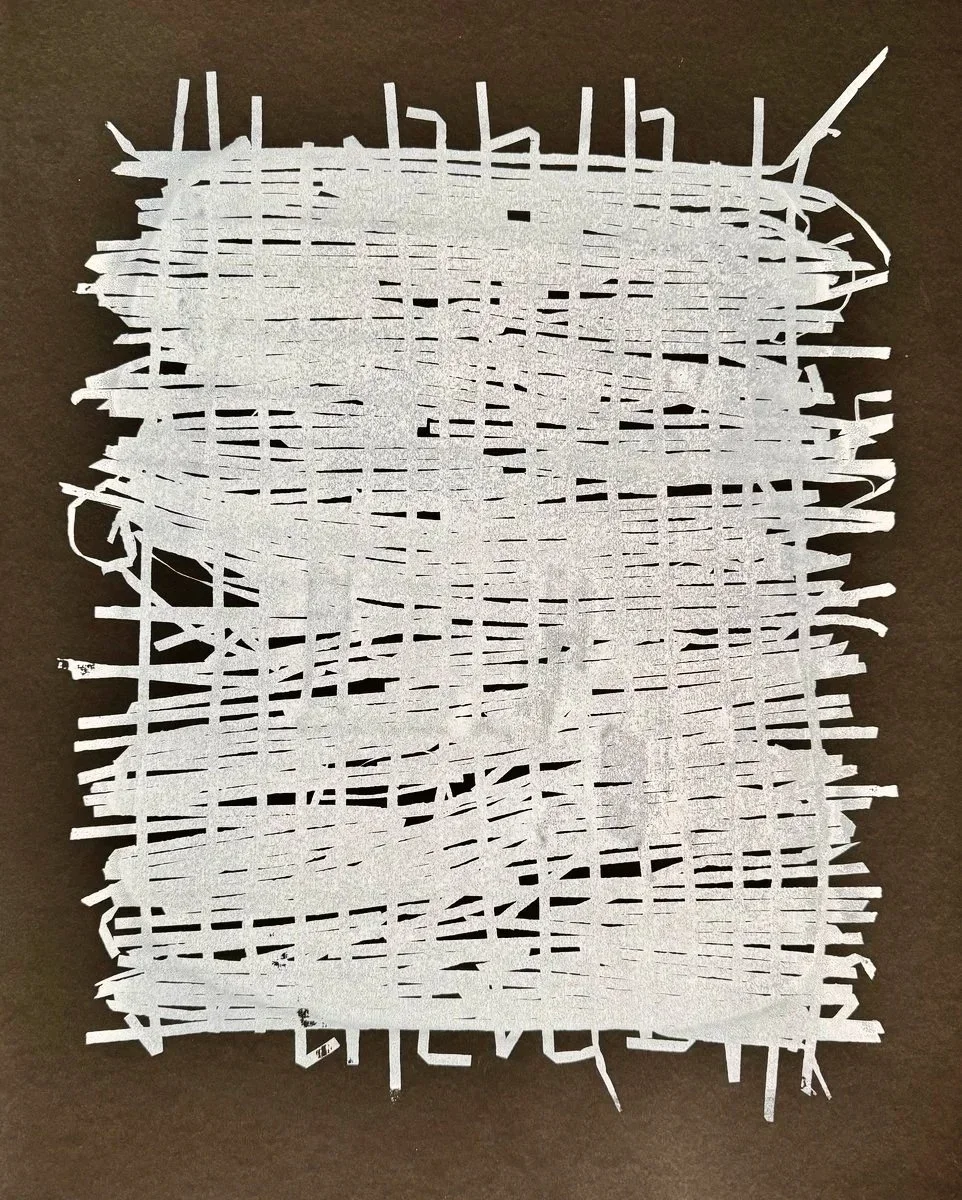
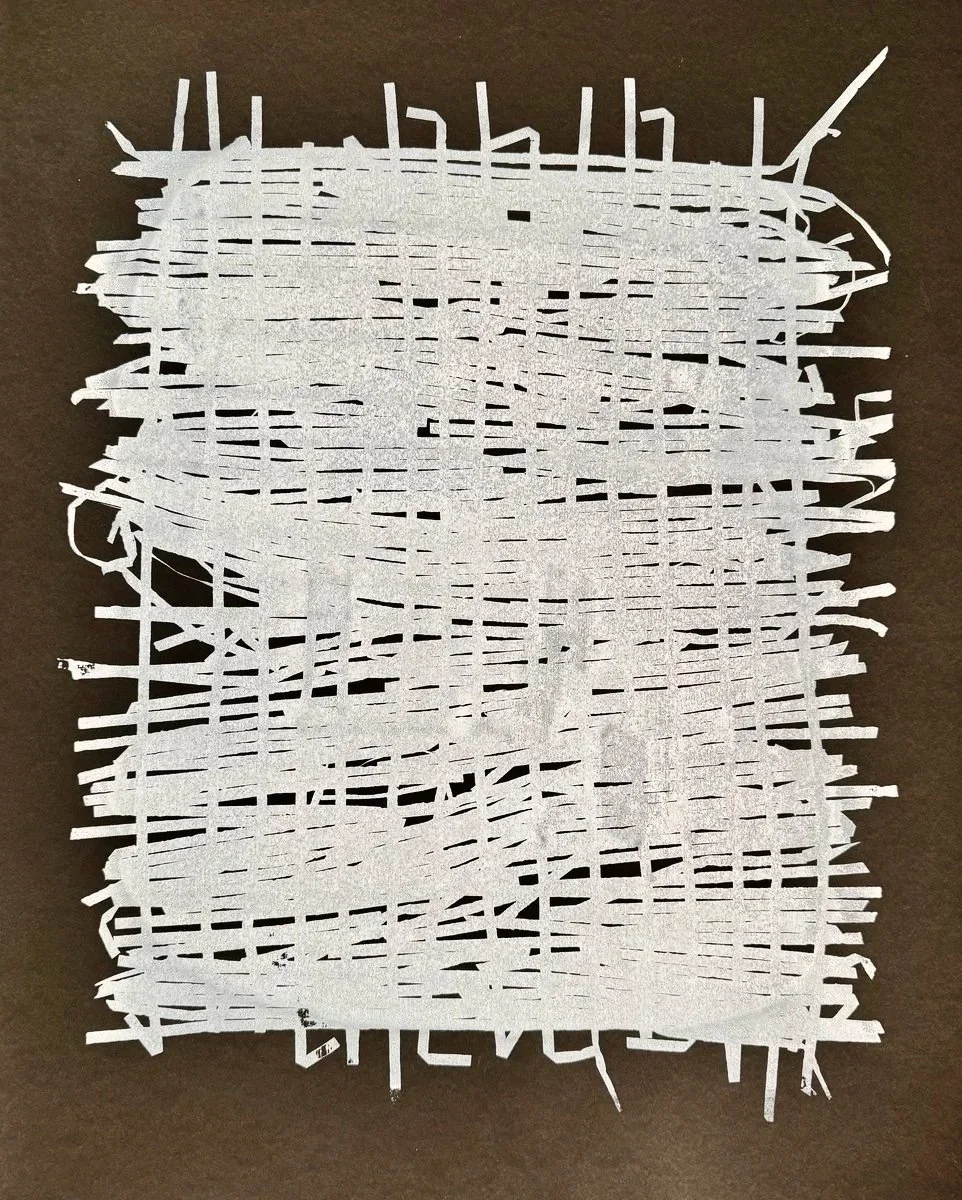
Kat Rae's Unprint Reprinted series explores the imprint of trauma and grief by breaking down and creatively reinstating love letters. In 2017 Rae’s abusive husband, a veteran of the Australian Army, died by suicide. Death has a paper trail, particularly when that death is a direct result of the impacts of war. Psychoanalyst John Bowlby’s fourth stage of grief, ‘reorganisation’, sees the mourner realise that whilst their old life is changed forever, there can be a positive ‘new normal’. Rae’s weaving prints are an allegory that suggests all is not lost in the vast ‘shredded-ness’ of the ‘unprint’.
Psychoanalyst John Bowlby’s third stage of bereavement, ‘reorganisation’, sees the mourner realise that whilst their old life is changed forever, there can be a positive ‘new normal’. Rae’s prints of re-organised print matter are an allegory that offers a way to see that all is not lost in the vast ‘shredded-ness’ of the violence and grief.
Artist Biography
Before Kat Rae became an artist, she served in the Australian Army for 20 years, where she deployed to the Middle East three times. After the suicide of her veteran husband, Rae pivoted to her dream career of becoming an artist. She graduated from RMIT School of Art with a Bachelor of Fine Arts with First Class Honours in 2024. Subsequently, Rae’s art practice explores the cost of war, and how place, memory and experience layer and mesh.
These themes, underpinned by years of academic, military, artistic and personal research, explore how to commemorate war in relevant, honest and nuanced ways. Her work is held in national and state collections, including the Australian War Memorial, Shrine of Remembrance, and Australian National Veterans Art Museum, and has been showcased in over 30 exhibitions, including two solo exhibitions. She has been a finalist in the Napier Waller Art Prize, the Castlemaine Art Museum Experimental Print Prize, and 45 Downstairs Emerging Artist awards.
Her work operates at a political and social level, supporting thoughtful reflection. Recent examples are Deathmin, which won the 2024 AWM Napier Waller Art Prize and supported the Royal Commission into Defence Veteran Suicide. Further Sparks in the Dark, developed through the mentorship Rae received as part of the RMIT School of Art Social Change award she won in 2024, supports the voices of oppressed women artists in Afghanistan. This body of work won the 2025 8 AM Afghan Independent Media Art Award with co-artist Mursal Azizi, and is now a touring exhibition. Rae’s work was featured in the ABC documentary series After the War (2023) and, more recently, When the War is Over (2025).