House Tour
10 - 21 Dec 2025
Opening night
12 December | 6 - 8pm
G3
Curators Statement
Sean Holt and Alessia Catalano
House Tour brings together a group of multi-disciplinary contemporary artists whose artworks unpack the elusive phenomenon that is home and identity. Each artist reflects, reminisces, mourns, questions, invents and seeks belonging from past narratives that influence the now.
This exhibition is indeed a tour of artists understanding the ephemerality of humans in a forever-changing world, unravelling nostalgia, longing for another world in the past. This exhibition is a tour of a makeshift house, one that has been constructed to unpack intricate memories and showcase the fragility and intimacy of ‘home’ – ineffable in its meaning.
Artists
Helena Kean-Ong, Kim Nguyen, Tiffany An, Rubi Taylor, Ruby Archer, Elizabeth Cairns, Lauren Smith, Sarah Gulline and Aleksander Morris.
Helena Kean-Ong
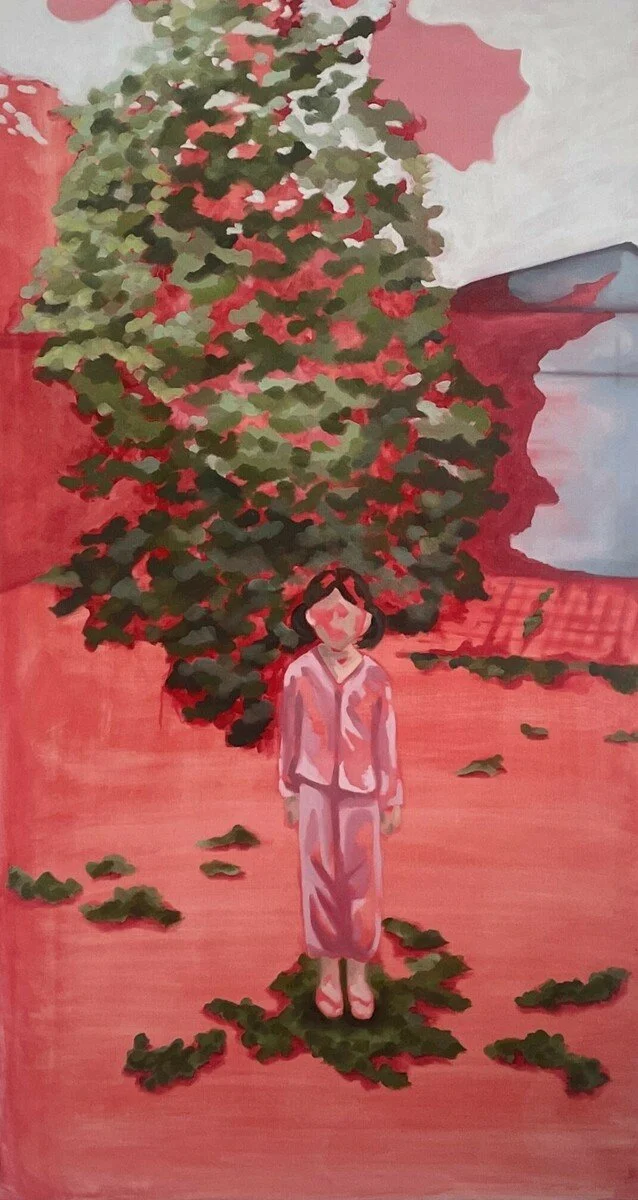
Where the Garden Burns Crimson
What remains is not him, but the traces.
The space between, what was.
Red drifts between celebration and sorrow, memory and loss. Fragments surface and fade, half remembered, a childhood suspended in time.
Presence and absence within the act of remembering. And what remains is a trace, a gesture of what was once whole.
Artist Biography
Helena Kean-Ong explores the act of remembering through mourning, the distortion of personal history, and the various methods of representing grief and memory. She considers how visual language can translate the elusive nature of memory. Her paintings reflect and posit how personal archives function not just as records, but as emotional triggers, utilised through the use of paint which offers a space to reconstruct, reinterpret and preserve what is slipping away.
Tiffany An
Artwork Statement
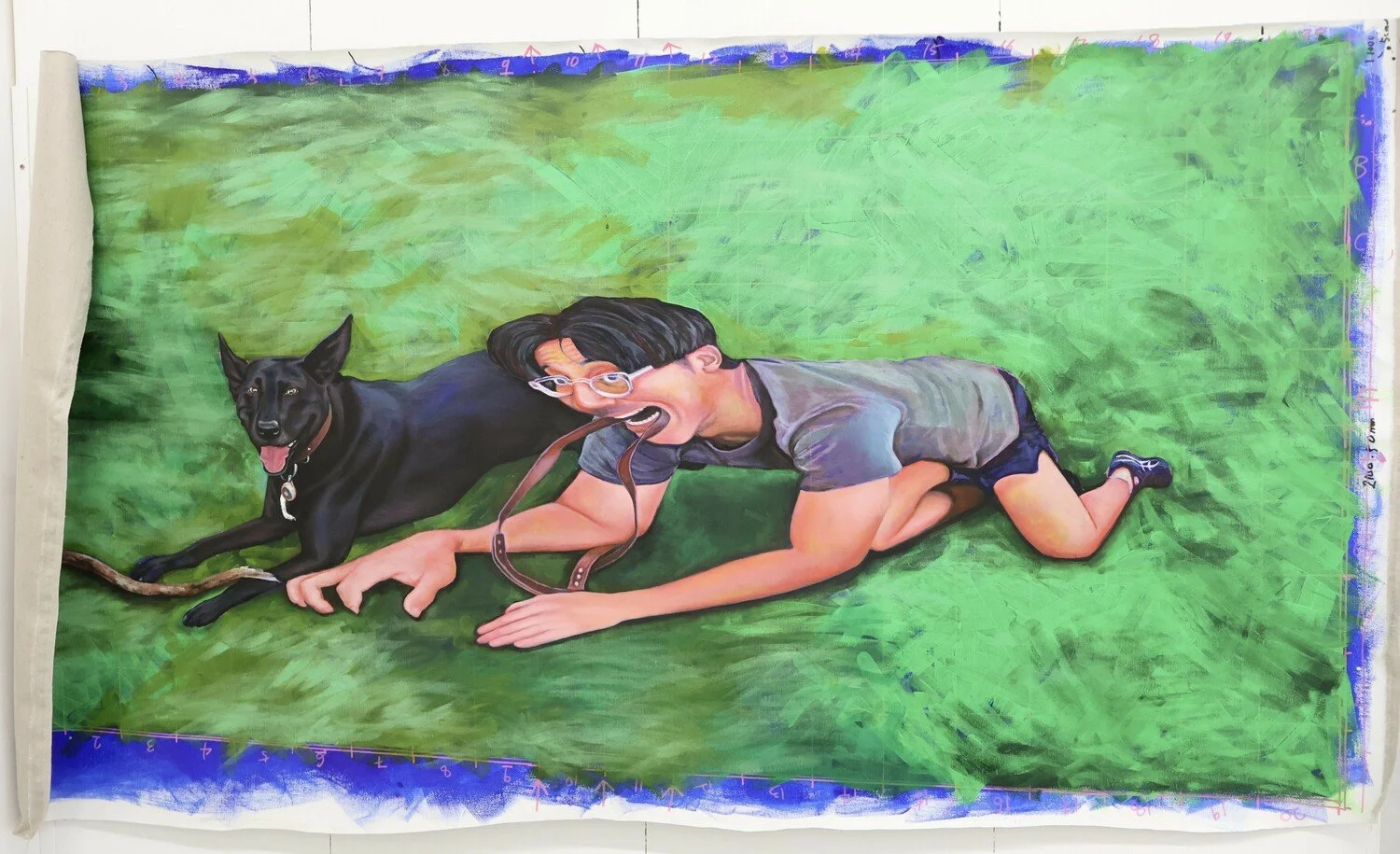
'Look at me, Come this way' captures an intimate, playful moment between Tiffany’s partner and their dog in the backyard, a small, ordinary scene that becomes a reflection of belonging. The image is distorted through an anamorphic lens, bending the familiar into something slightly uncanny. The visible grids and muted grass background deliberately expose the painting’s structure, revealing both the process and the fragility of the memory it holds.
Through distortion, she explores how home and identity are never fixed; they shift with time, emotion, and perception. The playful gesture of holding the leash by mouth, a shared, almost childlike moment, embodies affection and domestic intimacy, yet also the instability that underlies the idea of “home.” By exaggerating angles and flattening details, the artist seeks to question how nostalgia reshapes reality, and how even the most personal spaces can feel like reconstructed images, both tender and transient.
Artist Biography
Tiffany An is a Korean-born, Melbourne-based portrait artist whose work explores the subtle absurdities and emotional distortions of everyday life. Working across various media and surfaces, she employs a layered and playful approach, inviting humour, exaggeration and unorthodox perspective into her portraiture to reveal unexpected truths beneath the familiar. Drawing on her immigrant experience and fluid sense of identity, Tiffany’s practice challenges what we recognise as the “normal face,” offering instead a vibrant, strange and revealing encounter with self and other.
Lauren Smith
Artist Statement
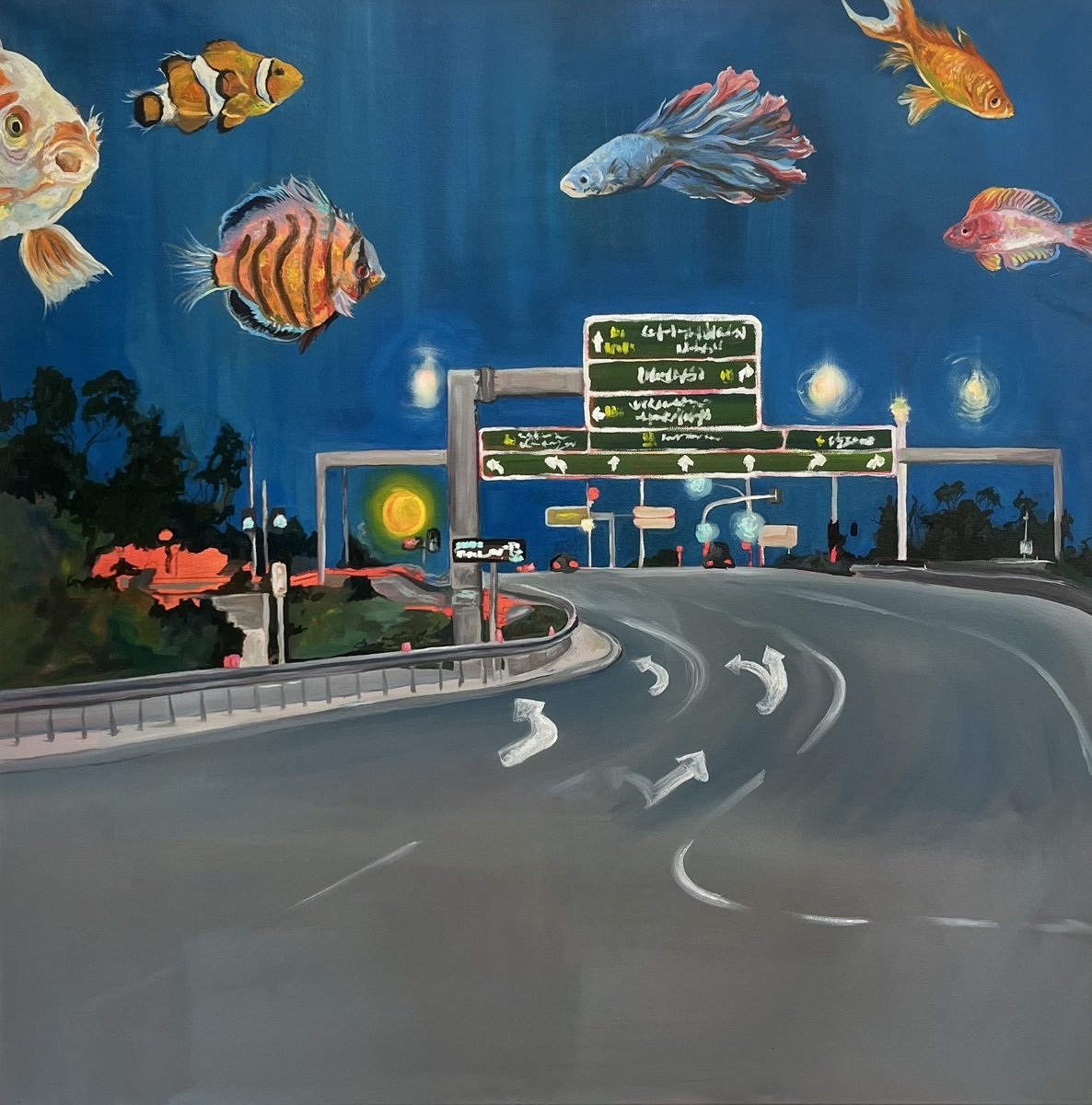
Urban Fishtank embodies both a sense of nostalgia and dissociation, positioning the viewer as a driver or passenger on a journey home. Whilst this work is based on a specific connection road in Smith’s local area, a sense of familiarity is preserved through unreadable text and a universally recognisable environment, enabling for the adaptation of the scene to different suburban landscapes. Existing as an artist in the outer suburbs of Melbourne commuting to the inner suburbs every day, the artist finds comfort in her surroundings and feels the area has ultimately shaped her identity and artistic practice; expanding beyond the domesticated setting of Smith’s own home, to the nature reserves, roads and landmarks her suburb provides.
Artist Bio
Lauren Smith is an artist born and raised in the south-eastern suburbs of Naarm/Melbourne. Her works utilise an array of painting and drawing techniques, specifically engaging with oil, watercolour and coloured pencil. Her practice primarily engages with magical realism and surrealism from a female lens, the mundane and personal encounter, and how unconscious thinking processes can ultimately transform our depictions of the world. She particularly enjoys painting processes as they enable her to bridge her own internalised, impulsive thought with outer suburban scapes, creating vivid, animated scenes of the terrain around us.
Ruby Archer
Artist Statement
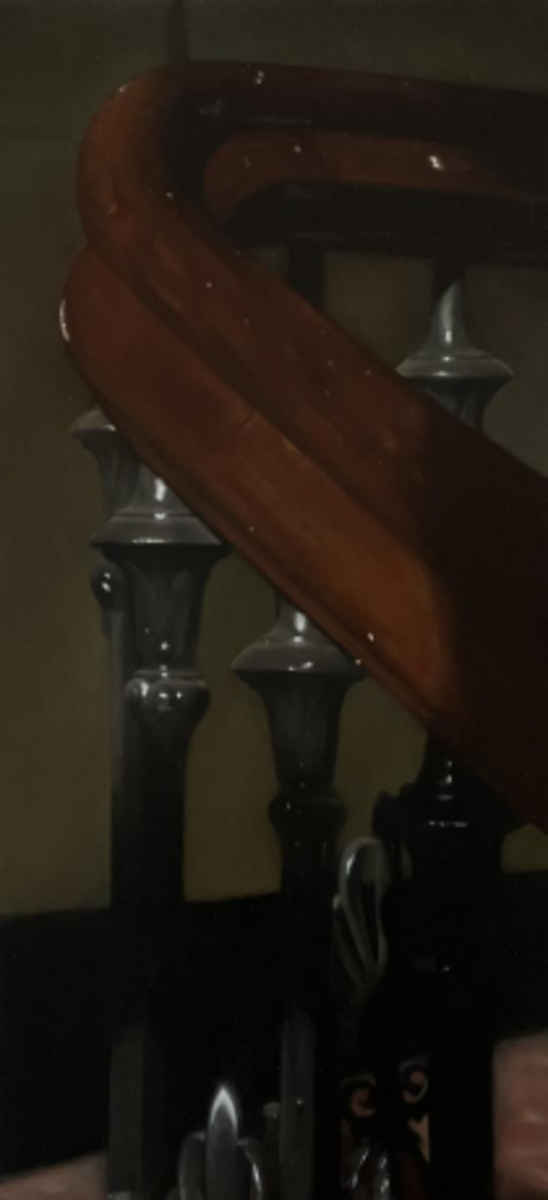
Ruby’s selected paintings highlight the quiet observers of our daily rituals. By isolating the unsuspecting images of our domestic lives, we are prompted to move beyond simple utility and recognize a profound, ingrained familiarity with these objects.
Artist Biography
Ruby Archer is an emerging artist deeply engaged in their studio practice, currently pursuing a BFA at RMIT University. Their studio practice is dedicated to capturing the contradictory nature of the sublime, particularly when it emerges from the unremarkable and quotidian. Archer’s practice is critically informed by their foundational work in photography. This interplay between disciplines is driven by a desire to explore the difference between a real moment and its image. Her photographic process is of precise observation; seeking to capture the intimate, quiet tensions of everyday life. Her work hinges on the search for what Roland Barthes identifies as the punctum: a term for a small detail that "pricks" or deeply affects the viewer. For Archer, this is the unsuspecting element that makes a familiar scene feel suddenly uncertain or profound. It is this powerful tension between the known and the mysterious that she translates from her photographs into her paintings.
Aleksander Morris
Artist statement
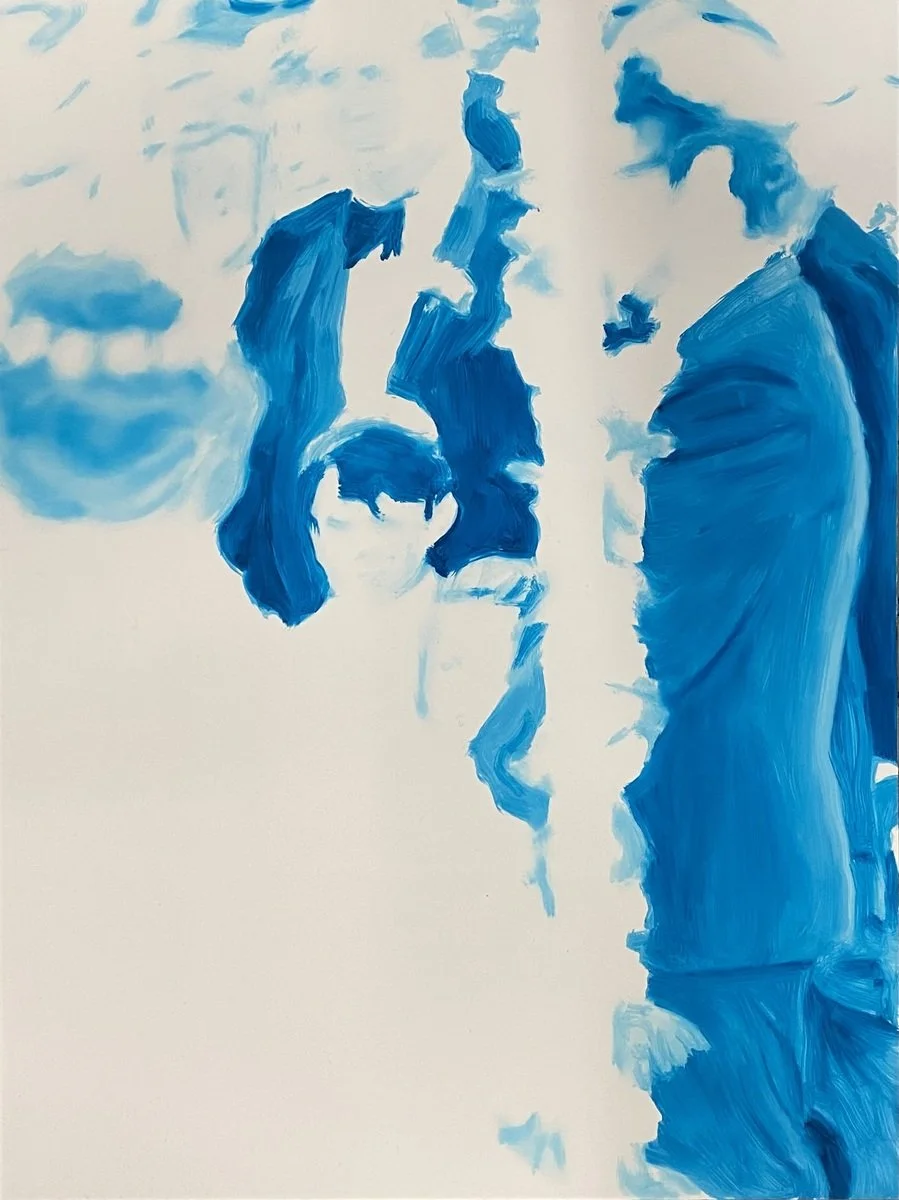
Aleksander’s paintings are part of a body of work called Memory Transplants, an exploration of diasporic Jewish identity through the lens of his grandparents’ photographic slides. Aleksander uses projection during the painting process to capture photographic material traces in the images, which then link his paintings to real events in the lives of his family members. These works are representative of knowledge both passed down and lost through generations of migration, and the sense of alienation that comes with a dual identity. The artist’s method of working is quick but reflective, retelling the stories of his heritage and ultimately making them a part of his own memory.
Artist Bio
Aleksander’s artistic practice focuses primarily on identity and the translation of the photograph into painting. His process emphasises colour and mark-making, and the subject matter of his work usually relates to interior spaces, architecture, and the family archive. He utilises projection, working closely with photography to create indexical relationships with the source material. His work was included in the Japan Print Society’s 65th Annual Exhibition at Tokyo Metropolitan Art Museum as a student under the guidance of Japanese print masters. He has also been included in SOL Gallery’s SOULS group show, and had his first solo exhibition Memory Rituals this year at Artemisia Gallery. In 2025, he completed his Bachelor of Fine Arts (drawing studio) at RMIT, and will continue further study in an Honours degree in 2026.
Elizabeth Cairns
Artist Statement
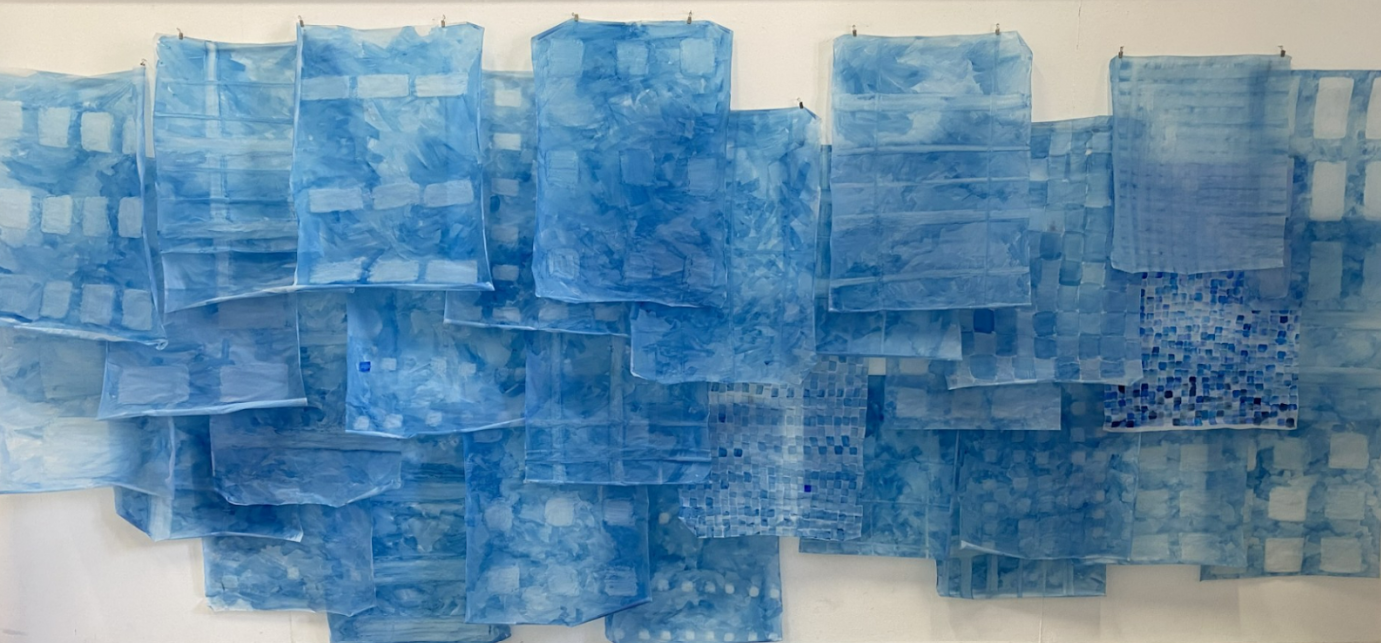
Elizabeth’s Grids aim to discover meaning behind structures, and question how humans live within a whole range of natural and artificial structures. Each of her works are inspired by a pre-existing structure, many involve grids of rectangles or squares as they co-exist everywhere with humans. These works highlight the many ways that structures influence our lives that we may not be aware of, the many ways that we are sectioned off, physically and socially. Her work reveals how we underestimate the impact that physical structures have on us.
Artist Bio
Elizabeth Cairns is a Melbourne/Tasmanian based artist who works across a range of mediums including but not limited to drawing, painting, sculpture and photography. She often questions humanist beliefs, advocates for animal rights and adopts a feminist and queer perspective in her works. Elizabeth’s work has been displayed at the Tasmanian Museum and Art Gallery (2021), and the RMIT graduation show (2025).
Kim Nguyen
Artwork Statement
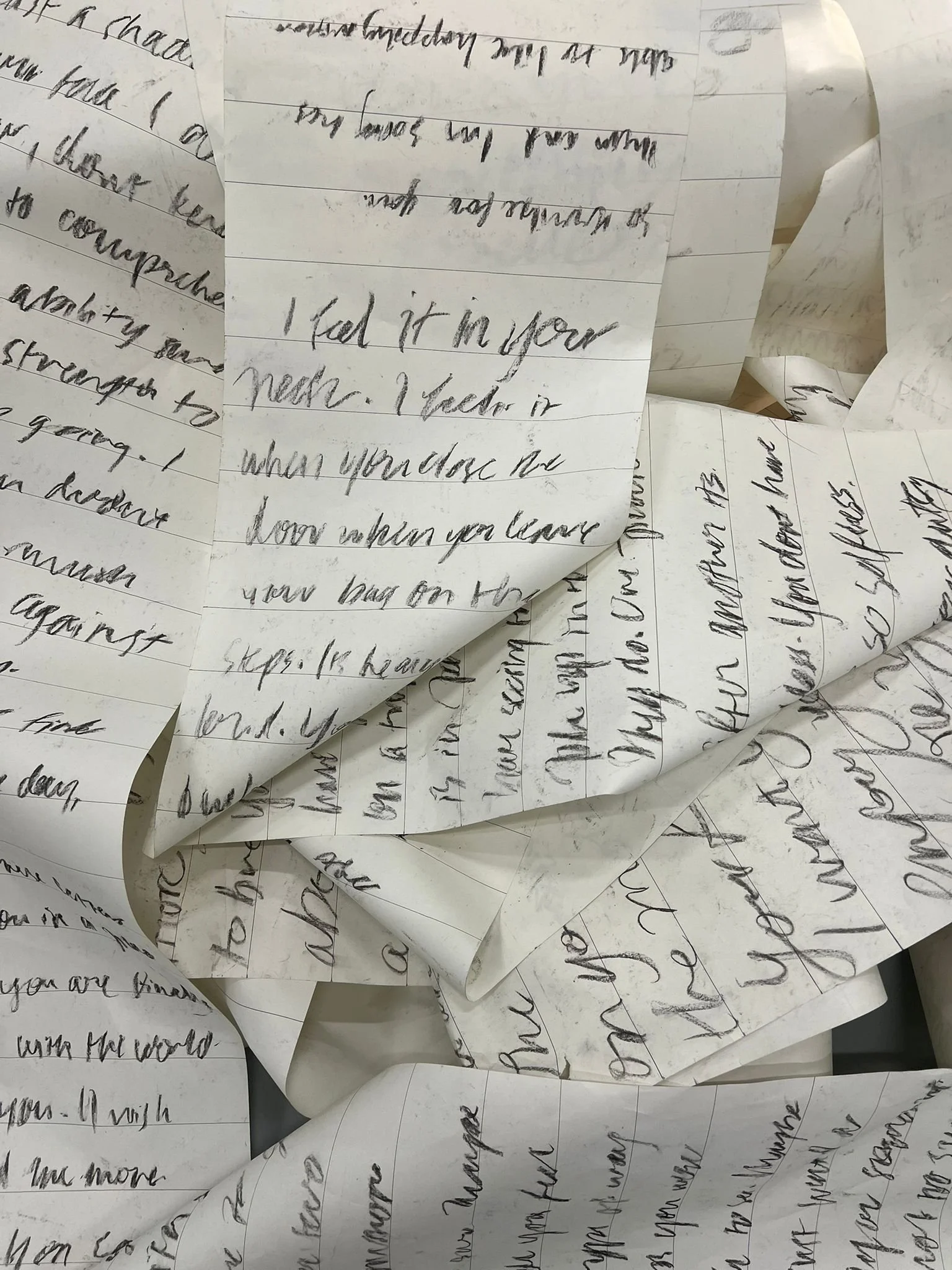
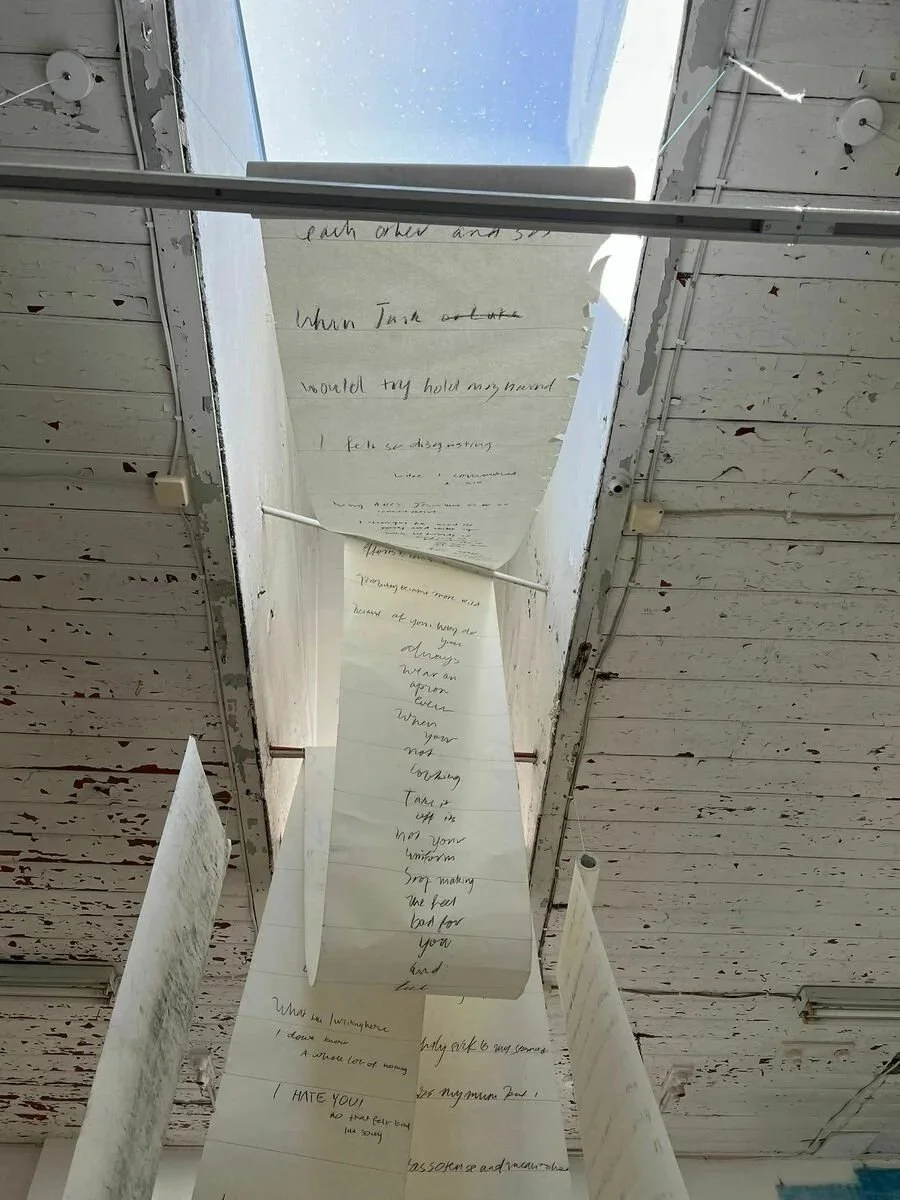
No Love Labours reflects the period of coming-of-age that results in the detachment from family, and expresses the weighted suppression of silence and betrayal. The letters and drawings are a rumination on what it means to endure. Labour is a symptom of love as the action of writing and erasure becomes a continual, relentless process of psychological endurance. Kim responds to the dysfunction of chaos by seeking linguistic repetition and comfort within the psychological impermanence of marking and erasing charcoal materials. What remains is what is left unsaid – it is a letter of love, hope, sacrifice and gratitude.
Artist Biography
Kim Nguyen is a multidisciplinary artist practicing in Naarm, Melbourne, having recently completed a Bachelor’s Degree in Fine Arts at RMIT, majoring in drawing. Deeply felt and contemplative, Kim’s installations are created to depict the physical and emotional turmoil of silence by capturing the relational complexity between mother and daughter. Within her broader multi-disciplinary practice, she explores the fragility of human intimacy, emotional liminal spaces, and the attachments we form to our loved ones.
Sarah Gulline
Artist Statement
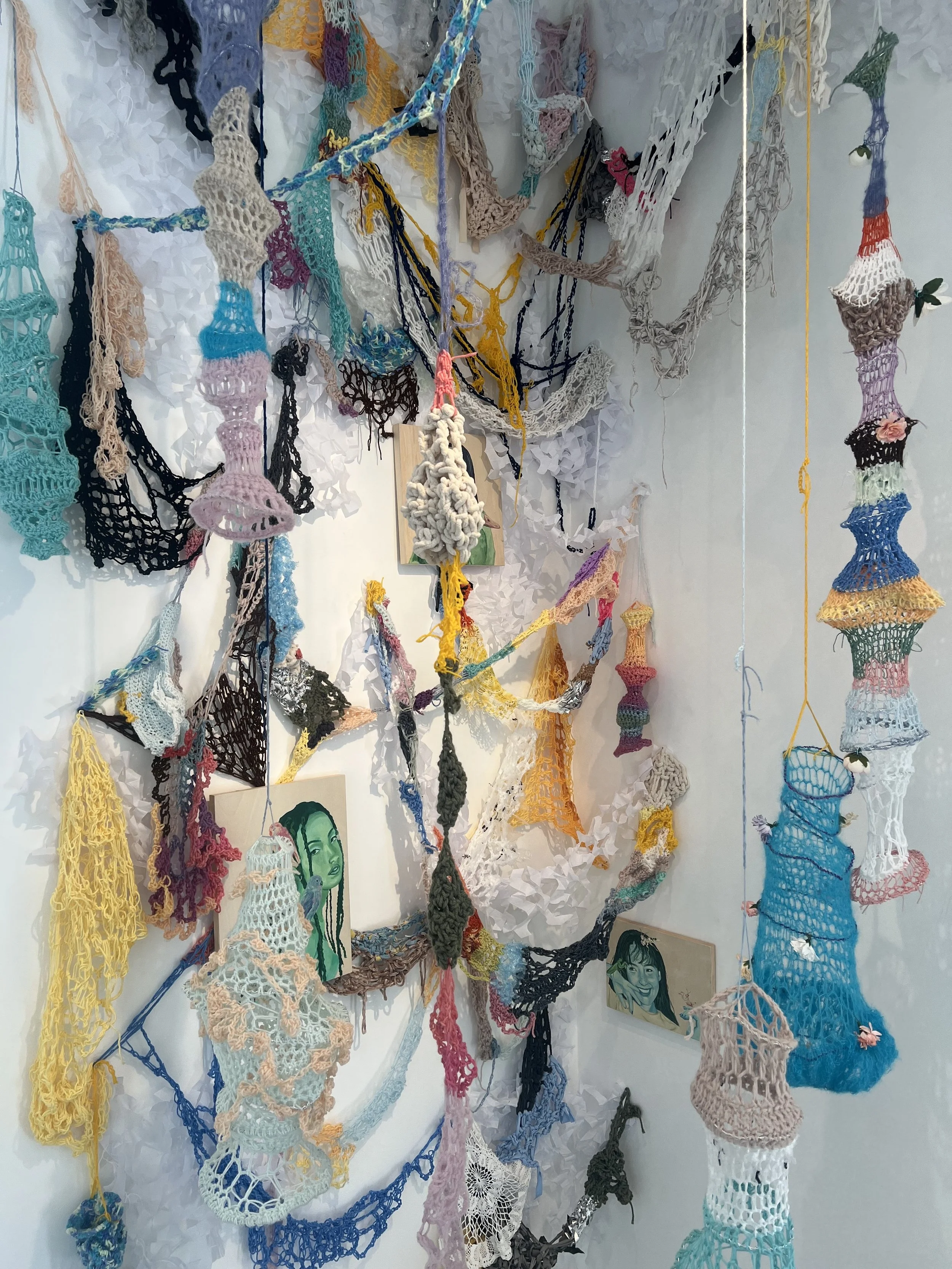
tenderthreads centres on the tactile and emotional potentials of material, using found textiles, yarn, and gouache-painted portraits to weave together themes of memory, emotion, and presence. Through the meditative act of crochet and painting, web-like structures emerge, each thread becoming a record of time, touch, and physical presence. These intricate patterns transform the space into one that invites intimacy, vulnerability, and contemplation. The gouache portraits of human-animal connections further deepen the emotional resonance of the installation, capturing the fragility and strength of the human form. The work connects to the exhibition’s exploration of home as a fragile and shifting space. The crocheted webs act as physical manifestations of emotional entanglements, mapping the presence of the body within space and memory. Through tactile engagement with these materials, the artist challenges the separation of mind and body, inviting the viewer to reflect on how memory and emotion are intertwined with physical space. tenderthreads offers a meditation on the slow, deliberate processes that shape emotional worlds, urging the reconsideration of home not only as a physical space but as a deeply emotional and evolving presence.
Artist Biography
Sarah Gulline is a Tasmanian artist residing in Melbourne, Australia. Currently completing her final year of a Bachelor of Fine Arts at RMIT, Sarah’s practice explores material and emotional connections through her material disciplines. Working with painting, crocheting, fabrics and textiles, her practice reflects how tactile engagement can foster emotional connections. Following the agency of her materials, Sarah allows her creative process to guide her rhythm and form. Looking at the work of theorists Elizabeth Grosz and Katve-Kaisa Kontturi, her work rejects the separation of mind and body and embraces embodied knowledge in material. Her process values slow, intuitive labour, where physical creative practices are embedded with emotion, care and bodily presence.
Rubi Taylor
Artist Statement
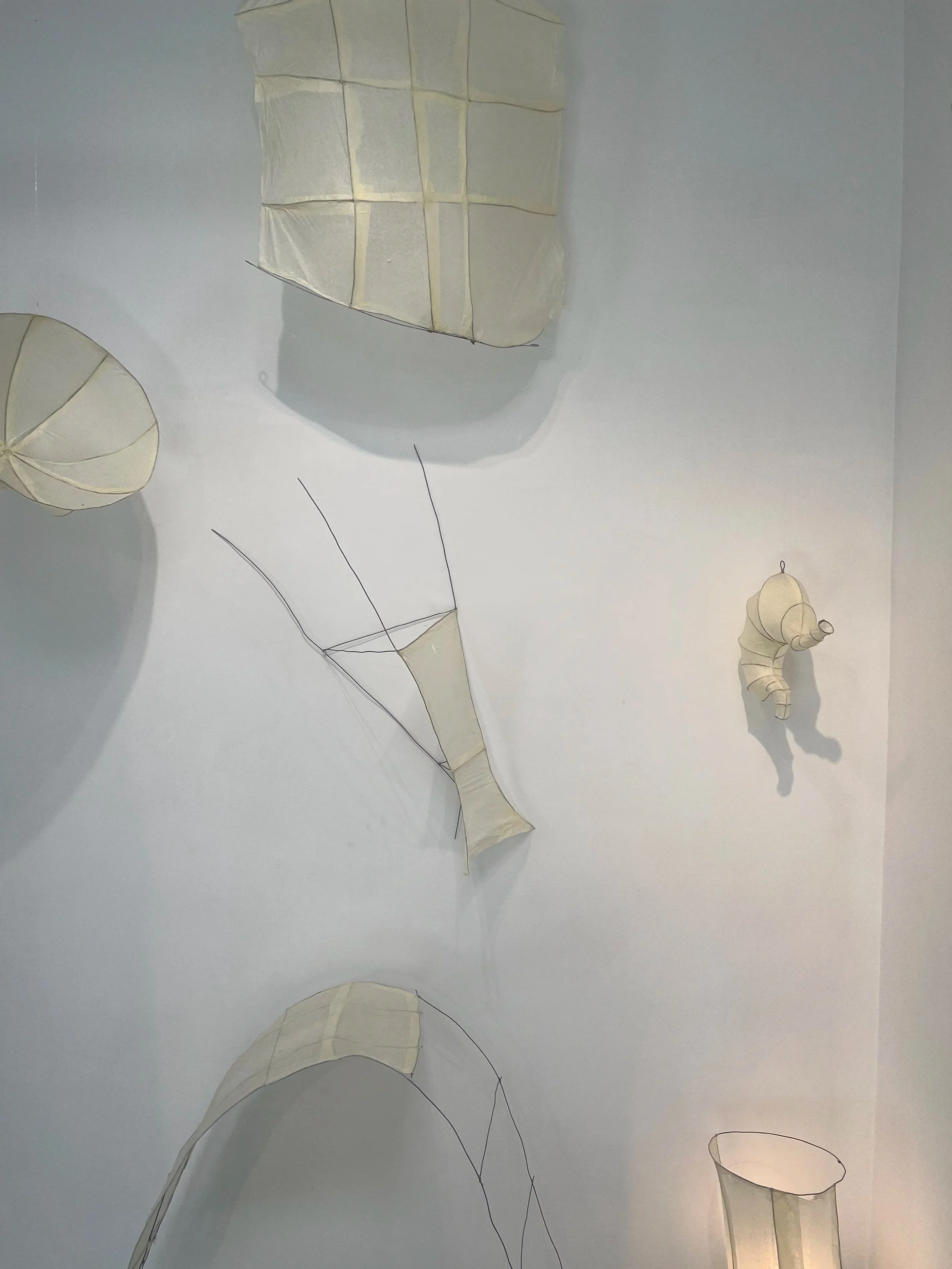
Body Piece is an installation of sculptures that explore the relationship between the body and the home. They take the form of hybrid structures, part humanoid, part domestic, built from wire and translucent material. These obscure structures serve as a mere memory of a body that no longer exists, a testimony to the evolution of ourselves. The body is both permanent and ever-changing: a vessel that carries us through life while continually growing and adapting. This sense of transformation is echoed in the sculptures’ delicate construction, where translucent skins are stretched across wiry frames, processes and forms that suggest both humanoid and domestic structures. They hover between presence and absence, fragility and form, embodying the porous boundaries between self and home. Through their quiet presence, they consider how identity and belonging are formed through the delicate balance of permanence and change.
Artist Bio
Rubi Taylor is an Australian contemporary artist working primarily with moving image, installation, and projection. Her practice explores immersive multimedia environments that merge sculptural forms with new technologies, creating spaces where bodily imagery and material structures collide. Drawing from both personal experience and the broader social climate, Rubi’s work interrogates the construction of idealised femininity, the operations of the gaze, and the political uses of beauty. Her installations often employ strategies of abjection and grotesquerie to disrupt patriarchal narratives and question how women’s bodies are represented, consumed, and controlled. Through distortion, fragmentation, and embodiment, Rubi reclaims the female form as a site of resistance and transformation.
Contact
Phone : (03) 9482 3550
mail@redgallery.com.au
Address
157 St Georges Rd
Fitzroy North, Victoria, 3068
Map
How to get here
Tram: Route 11
Stop 21 just north of Edinburgh Gardens
Melway Ref: 30B12
Parking in nearby streets
Bus: 504 (Reid Street)
charcoal on paper, installation